Tree or Building? (Why can’t we have both?)
By Gary Winn
2018-10-29
Tree or Building?
(Why can’t we have both?)
By Gary Winn Architect, Arboriculturist, a Professional Member of the Consulting Arborist Society and passionate about buildings and trees.
The first question in the title of this article too often arises from proposals for development sites, the second question is much less often asked.
The physical separation that commonly exists between trees and buildings is metaphorically depicted by the roles of the two separate professions of architect and arboriculturist.
Architects:
- will have knowledge of building regulations in relation to trees and the implications of building near to them, but the focus is often on protecting the building from the potential damage that a tree may cause.
- are aware of the tables for foundation depths set out by NHBC Chapter 4.2, which also sets out to protect the building.
- education, although long, (seven years in total) and at a high academic level, has virtually no arboricultural content and certainly no information on the biological requirements of trees.
- will rely on the appointment of a separate arboricultural consultant to look at the implications of the development proposals but sometimes, this can be at the point when a design has been agreed with the client.
Arboriculturists:
- work to formulate a Tree Constraints Plan followed by an Arboricultural Impact Assessment, to show both the restrictions for developing a site and the effect that the proposals have on the existing trees. It has a bias towards the protection of the tree.
- have knowledge of the criteria in the NHBC Chapter 4.2 tables in relation to foundations.
- use the criteria set out in BS5837:2012 to assess the architects design proposals.
- are very familiar with BS5837:2012 Trees in relation to construction - Recommendations, although this has a bias towards the protection of trees.
As an architect, my frustration for many years has been the limited knowledge that architects’ have in relation trees, so in 2009 I embarked on the Level 4 Arboricultural course. My work has an architect has improved as a result of gaining knowledge of arboriculture in that I am better equipped to consider the incorporation of trees within the design of buildings. I use the term ‘overall architecture’ to describe the positive interaction of built and natural environment.
Since completing the arboricultural course, I have provided much arboricultural input into architectural schemes for other architects practises. I have noticed that in some cases, once architects had approached me, the scheme was well advanced, and in some cases agreed as a final scheme with the client. I have since, made it known that it is crucial that an arboricultural consultant is appointed at the same time that the the architect is appointed by a client, to establish the parameters of developable land, (the TCP), and this has worked well. As a result, I have worked on some very exciting projects, where both existing and proposed trees are close to the buildings. I have used technical solutions such as screw piles, tree bunkers and elevated steel frames on hand dig pad foundations, to allow the roots of the trees to access oxygen whilst the ground floor of the building is raised off the ground.
I am currently working on a Professional Doctorate at Queen Margarets University, Edinburgh, where my research examines the gap between the architect and arboriculturists skill base, how they can be bridged and the physiological and psychological health benefits once an overall architecture has been created. As part of this research, I will be devising activities, involving groups of volunteers from the arboricultural and architectural professions and inviting them to take part. I anticipate that the inclusion of my research findings within BS5837:2012 and NHBC Chapter 4.2 will facilitate opportunities to allow trees and buildings to co-exist in closer proximity.
The definition of architecture is fundamental to this article, so it is helpful to consider a selection of ways in which architecture can be defined. Some say it relates to buildings, or at least only refer to architecture in relation to buildings, but we should also consider that not all buildings are architecture.
Others refer to architecture as something which functions well and looks good, or where form follows function. Vitruvius, a Roman architect and engineer, stated in the ten books of architecture that it comprised ‘Firmness, Commodity and Delight’. With the modern movement gathering momentum, Mies van der Rohe’s, “Less is More” was popular.
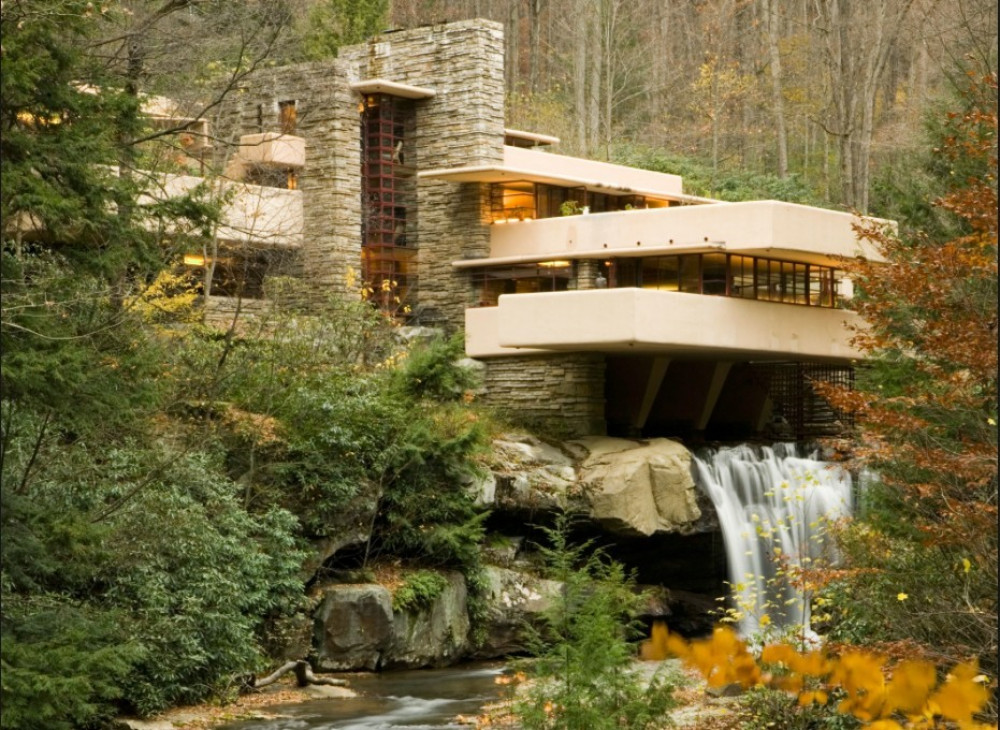
My preferred interpretation is that architecture should be a response to an environment, manifesting as a positive form, which stems from the philosophy of American architect, Frank Lloyd Wright, (1867-1959). His philosophy asserted in part, that buildings should grow from their site rather like a tree would, responding to the surrounding conditions and climate, etc.
A more illustrative example, based on Wright’s approach, could be as follows:
For a bulrush to thrive in an environment, a seed would need to propagate in a moist or wet marshy soil, with essential nutrients relating to its biological constitution. In the same way, a cactus seed would need a desert environment with a high daytime temperature, low water content, and a looser granular ground material to have a chance of success.
Transposed, it would be highly unlikely for the two examples to be able to succeed in the other’s environment.
Buildings should, like trees, respond to their immediate environment and manifest as something beautiful. If both buildings and trees are considered as architecture, then it follows that they should be considered in the same way.
Current documentation that protects either buildings or trees when they are considered within close proximity of each other, can be divisive.The general lack of arboricultural education within the architectural profession and lack of architectural knowledge with the arboricultural profession can also prove divisive. If these gaps were bridged, it would allow opportunities to create an overall architecture that included both trees and buildings.
Frank Lloyd Wright believed strongly in the relationship between nature and architecture, and the relationship of a building and it’s genius loci. (above Fallingwater, Pennsylvania, completed in 1937) (Google images)
The health benefits of forest bathing, green prescriptions and nature prescriptions are well documented. In general, humans have an affinity with the natural environment and look to it for relief from the day to day challenges of life and work stresses.That is possibly why we choose a relaxing stroll in the park or countryside to boost our physiological and psychological well-being.
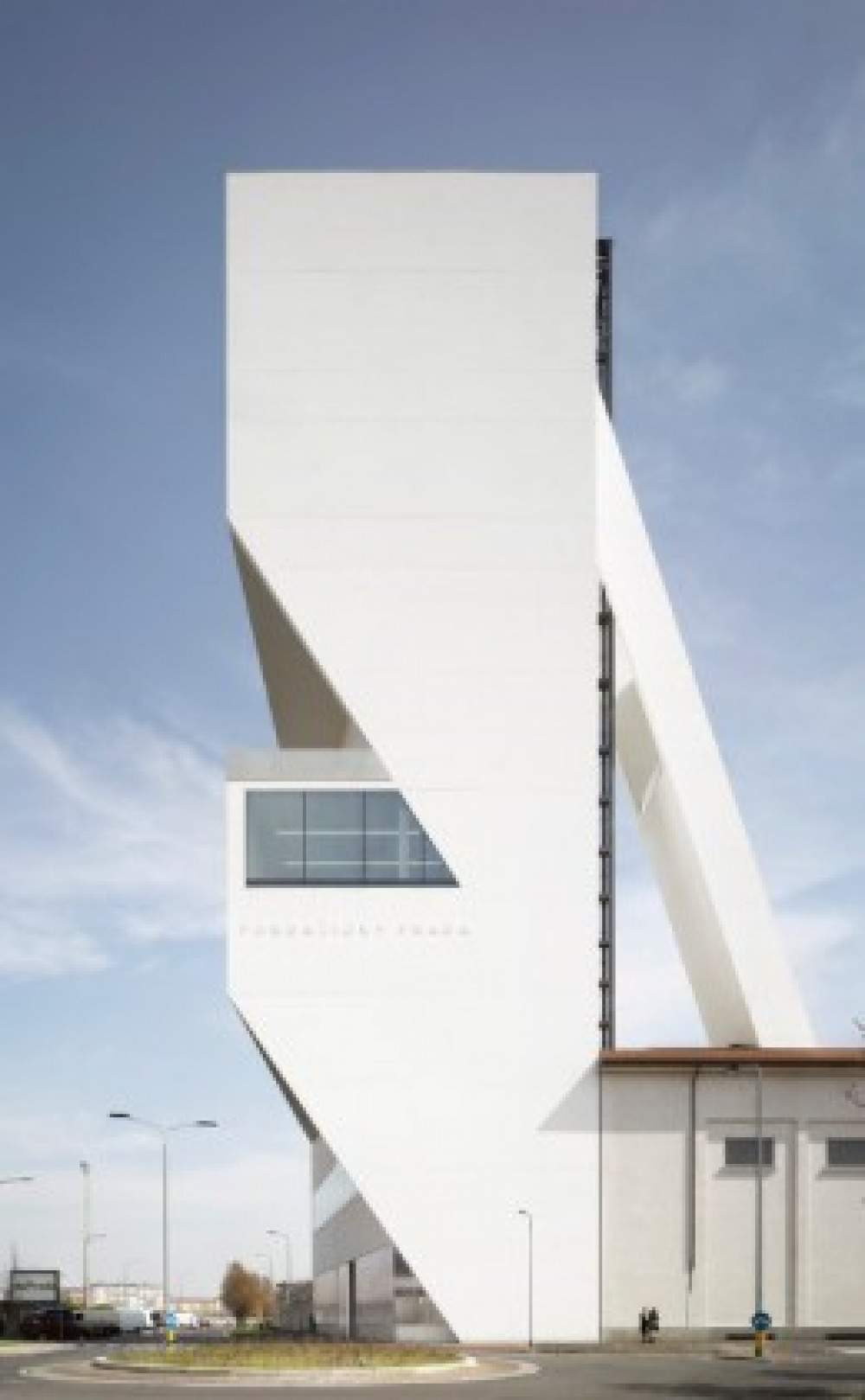
It is possible to create beautiful architecture without trees close by, but I always think it is a lost opportunity. For example, the “Torre” of the Fondazione, Prada, Milan by internationally renowned architect Rem Kool Haus, has no trees.
The integration of trees, could have provided an opportunity for the inhabitants to connect with nature, with views out through tree canopies. Opened windows would allow the heathy presence of cleaner air compensating city pollution, and the relaxing sound of rustling leaves buffering the sound of the city beyond.
The new Torre tower building of the Fondazione Prada, Milan, 2018 Rem Koohaas (Google images)
If our homes were of good architectural design, in close proximity to the architecture of trees, ie part of an overall architecture, they could provide a sanctuary from the day’s challenges, enabling us to recalibrate and recover, preparing us for the offerings of the following day.
Architects and arboriculturists, working together, can make this happen.The meeting of the architectural and arboricultural professions, underpinned by a desire to improve the environment where we live and work, could offer an overall architecture.
The exchange of knowledge between the two professions is vital to allow architects and arboriculturists to work towards the creation of an overall architecture. My current research focusses on how arboricultural knowledge can be introduced to the architectural profession.
Over the next few months, I will be conducting the research activities, I mentioned previously, addressing issues that create the divisions preventing trees and buildings from existing in close proximity, to each other.
Individuals and groups are welcome to take part and encouraged to make contact at gary@progressionarchitects.com
Other Images