Seminar led by Manchester's City of Trees Team
By Colin Hambidge
2018-09-18
Seminar led by Manchester's City of Trees Team
At Barcham Trees, 30 August 2017
Report by Colin Hambidge
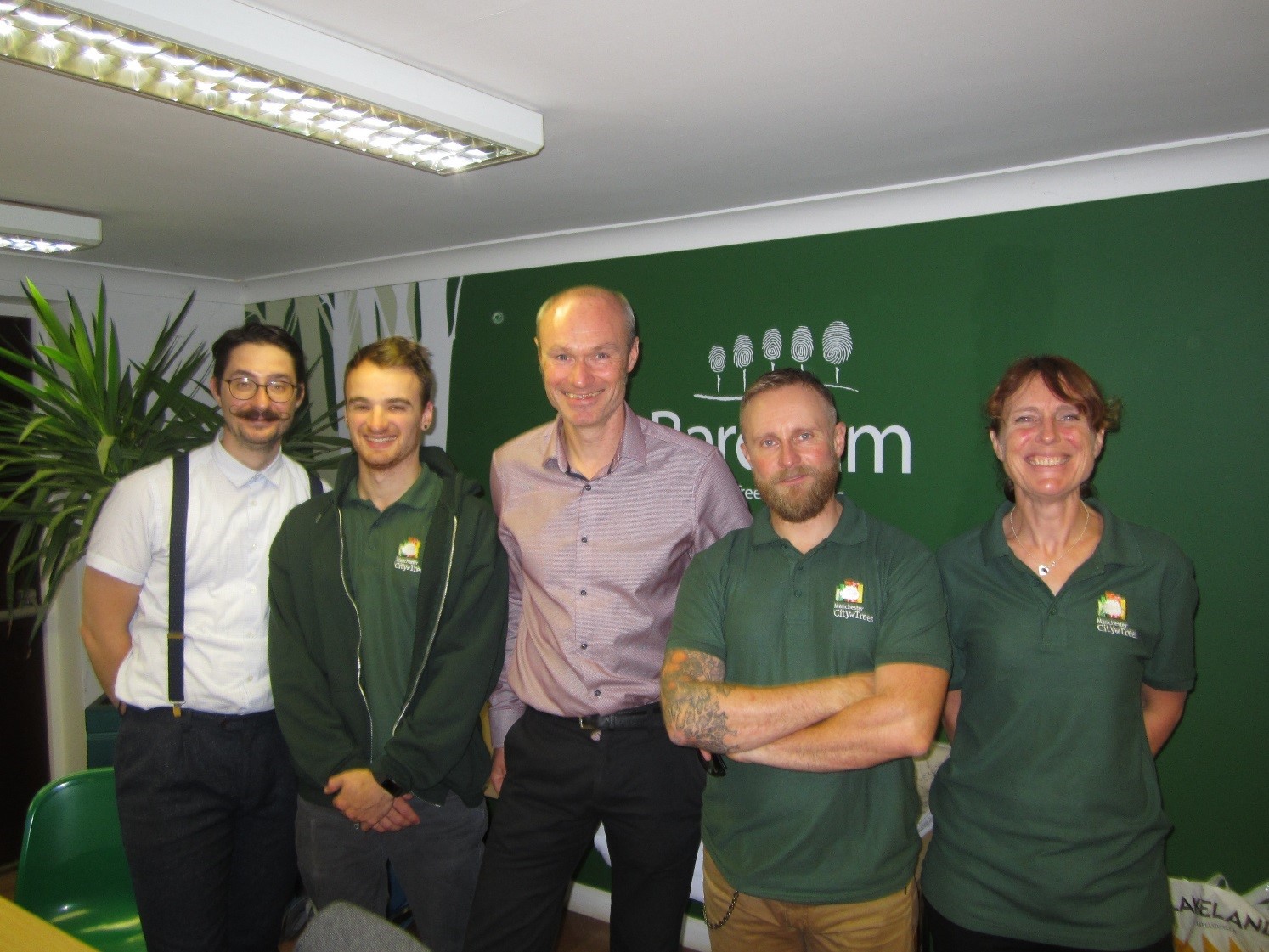
An audience of tree officers, landscape architects, urban foresters and woodland strategists enjoyed a fascinating day of presentations from Manchester's City of Trees team at Barcham Trees on 30 August 2017. The event was led and introduced by City of Trees' green infrastructure planning and technical manager Pete Stringer. He began life as a town planner at Manchester City Council before joining Red Rose Forest in 2001 to manage the now nationally recognised Green Streets project; since 2009 he has delivered many green infrastructure projects in Manchester city centre and Salford.
Pete explained the movement's aim is to reinvigorate the landscape, transforming underused or unloved woodland, and planting a tree for every person living in Greater Manchester within a generation. This translates as three million trees to be planted in the next 20 years, with the plan for 2,000 hectares of currently unmanaged woodland to be brought into a productive, beneficial condition.
Launched as the Greater Manchester West Community Forest, covering Bury, Bolton, Manchester, Salford, Trafford and Wigan, in 1991 and renamed Red Rose Forest the following year, the idea was always to engage communities. It was in 2015 that the inaugural City of Trees meeting of key players from across Greater Manchester was held, instigated by the Oglesby Charitable Trust and the Community Forest Trust in conjunction with Red Rose Forest, before being launched to the public later that year with a tree planting event.
Times are changing, Pete explained; there have been significant local authority budget cuts, which has resulted in the core funding for their work being greatly diminished, but there has been increased private sector interest, none more so than that from the Oglesby Charitable Trust, which has invested to support the development of the City of Trees movement. City of Trees now has many public and private sector partners partners, including Barcham Trees, United Utilities, Natural England and Transport for Grater Manchester.
City of Trees has had to look at new and more innovative sources of funding to support its activities. It provides 'pay-as-you-go' support from districts within Greater Manchester for specific pieces of work it does, and activity-based corporate social responsibility days are proving popular with organisations keen to promote team-building among their employees. City of Trees also offers guidance for developers and conducts tree replacement opportunity surveys for new developments. It also runs public appeals using tools such as crowd-funding to support projects which have a high 'public realm' profile. Pete concluded this part of the day by emphasising there is significant interest in and support for the urban orchards, green streets, and schools projects that City of Trees delivers, with 227,000 trees already being planted and that more than 5,700 volunteer-hours have been given to the cause.
Our next session, which looked at an evidence-based mapping approach to tree planting, was led by Bryan Cosgrove, the movement's Technical Green Infrastructure Officer. With more than 15 years' experience in the environmental sector, his current focus is on modelling provision and the needs of ecosystem services in towns and cities, especially in respect of targeting tree-based solutions to problems in the water environment.
Bryan told his audience flood resilience and water quality are currently hot topics in Greater Manchester, and that City of Trees is proud to be seen as the 'go-to' organisation in all the area's tree matters. With limited resources, the difficulty, and competing priorities both locally and nationally, he emphasised the importance of having a strategy-led approach for targeting where trees and other green infrastructure elements can provide the greatest benefits.
There is growing evidence of the effectiveness of green infrastructure in helping to tackle water environment problems. City of Trees has developed a model for mapping locations in the Irwell River catchment area where there is both a need and an opportunity for installing trees and other green infrastructure to help address water pollution. It has also produced a ‘final opportunity targeting map’, highlighting locations across the catchment where there are the greatest number of opportunities for green infrastructure to have a beneficial impact.
We them moved on to our first workshop of the day, led by City of Trees' development officer Miranda Clarke. Having recently joined the team, she is developing tree- and green space-focused projects which help people feel connected to and happy in woodlands and other natural environments.
Entitled 'Every Tree Tells a Story', Miranda began the session by introducing us to Heritage Trees, a four-year project to celebrate, record and protect Greater Manchester's local tree heritage. With funding from the Heritage Lottery Fund, the project is creating a unique online interactive database of people's stories, memories and photographs of their local tree heritage - as well as maps showing where to find trees of interest. She spoke of our emotional connection to trees and what they mean to communities, before looking at how we can sustain trees and engage communities via events. So far in Greater Manchester more than 250 public events and workshops have taken place, including dragonfly identification, natural dyeing with plants, tree grafting and story-telling.
Miranda then introduced us to Oliver Bishop, also known as 'Professor Jigget', but sadly not in character, of Yan Tan Tethera (www.yantantethera.org); this unusual name rang a distant bell in my mind, which I later realised was due to my fondness for the songs of Jake Thackray, and especially his 'Molly Metcalfe'. At the time I could not place it, but Oliver explained this was the start of a sheep-counting system once used by north-country shepherds. It runs from one (yan) to 20 (jigget).
Oliver's Yan Tan Tethera is based on his love of stories, which he feels have great powers. He believes in using this power to strengthen both children's and adults' understanding of their heritage, their environment, and their own capacity for imagination and creativity. This is achieved through the three core services - story-making and sharing workshops, storytelling performances, and environmental interpretation. It was soon easy to see why his services are much in demand with schools and other organisations in Greater Manchester.
Oliver Bishop works alongside City of Trees and has a team of volunteers who collect stories for him. He continued the theme that every tree, not just historical and veteran ones, has a story to tell. Some species are associated with folklore, such as the Norse Tree of Life, Yggdrassil, which was an ash. In landscapes, trees can take on a cultural significance, such as those in Sherwood Forest, while we can all have personal links to individual trees, which make them worthy of note to ourselves.
It was then back to Pete Stringer, who discussed how his Green Streets project has helped to turn streets from grey to green since it began in 2001. The inspiration came from Tree People, which was founded in Los Angeles in 1973, since when more than two million trees have been planted in the city. City of Trees' aim is to plant greenery in areas where there is currently none, and not just using street trees, but also plantings in car parks and creating green walls. The process involves residents as closely as possible, asking them whether they would like a tree outside their house, if they would like to choose the type and whether they would be prepared to help water it.
We then considered the exploration of local tree heritage and looked at engaging communities and asking them to share what they know and care about. Oliver Bishop told how he led a project for Year Four pupils at Spotlands Primary School children in Rochdale. Entitled 'What do Trees Mean to Us?', it comprised five weekly, 90-minute sessions and was sponsored by the Co-op, which was founded in the town. Children were first asked what trees meant to them and then looked at how trees figure in the ideology of the Co-operative movement before looking at what trees do for us and investigating Rochdale's industrial past, which is closely linked to the textile industry.
After lunch and the opportunity to tour Barcham's nursery Pete Stringer posed the Monty Pythonesque question 'What Have Trees Ever Done for Us?' He went on to tell how, in conjunction with Manchester University, City of Trees planted trial plots in five locations in the city to compare ground and air temperatures and surface water runoff in plots of asphalt, grass and trees in asphalt. It was found that tree shade could reduce the air temperature by up to 11°C and that the runoff from the grass plot was as low as 1 per cent compared with up to 62 per cent runoff from the asphalt plot.
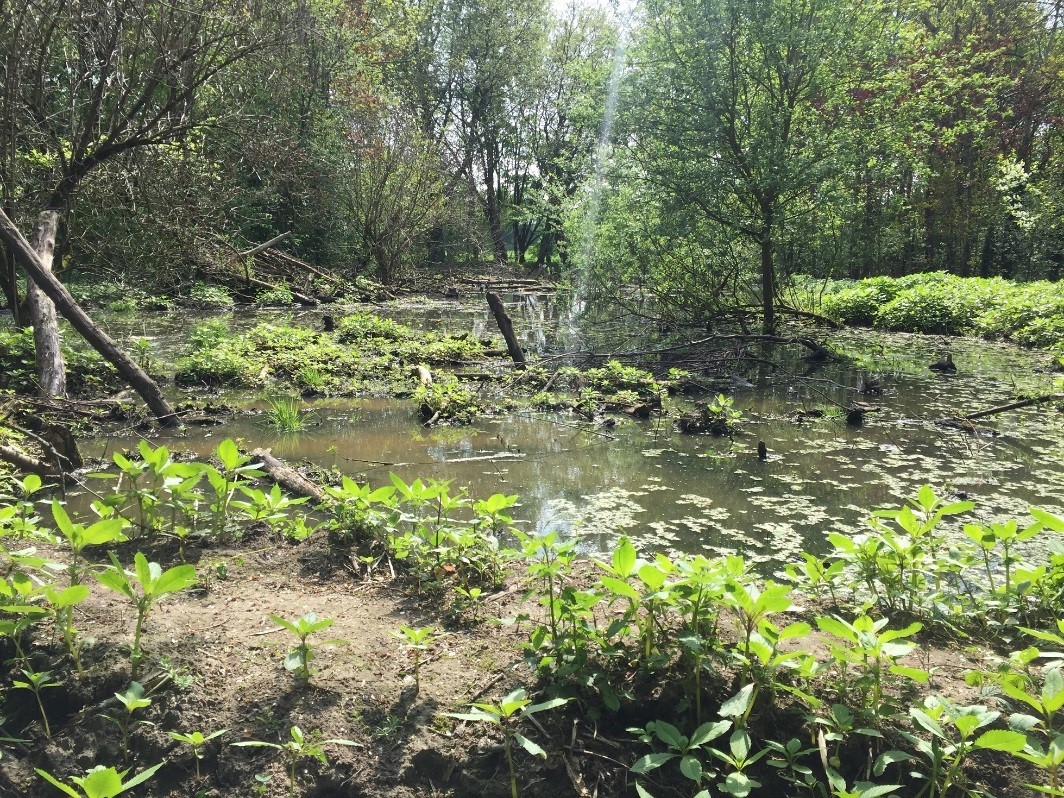
Another example of what trees have done for us is the Cleavleys Wet Woodland project, which is located on a former Salford City Council tree nursery between the M60 and M62 interchange and a tributary of the Worsley Brook. The brook is contaminated with pollution in the water draining off the motorway and an adjacent landfill tip.
Environment Agency monitoring of the tributary, conducted in early 2014, identified contamination with ammonia, and the discharge from the tributary had been contributing to water quality failures within Worsley Brook under the Water Framework Directive. There is growing evidence that by allowing streams to take a more natural course through adapted woodlands can help to breakdown particulates and other pollutants. This was seen as an opportunity by City of Trees to demonstrate a cost-effective alternative to more traditional, mechanical water treatment.
The tributary was diverted into the woodland thanks to the construction of a clay dam and there was subsequent planting of wet woodland species. Wet and waterlogged woods provide important habitats for biodiversity with an abundance of lichens, mosses, sedges, rushes and ferns, and large numbers of invertebrates which support amphibians, mammals and birds. This project was funded by the Environment Agency and the European Union as part of the LIFE-IP National Course project, which is exploring the role green infrastructure can play in managing and improving our water-based assets.
Bryan Cosgrove led the final session of the day, which looked at community woodland management. He reminded us that with mounting pressure on local authorities to identify land suitable for residential development, under-valued woodlands are under threat, especially if they are regarded by local people as 'unsafe' places to visit. The challenge is to bring woodlands back into active management and to minimise reliance on local authorities, he told delegates.
City of Trees is trying to build lasting partnerships with both communities and businesses, with a range of opportunities with which to engage potential corporate partners. It also organises a monthly volunteering event for what it terms its 'citizen foresters'.
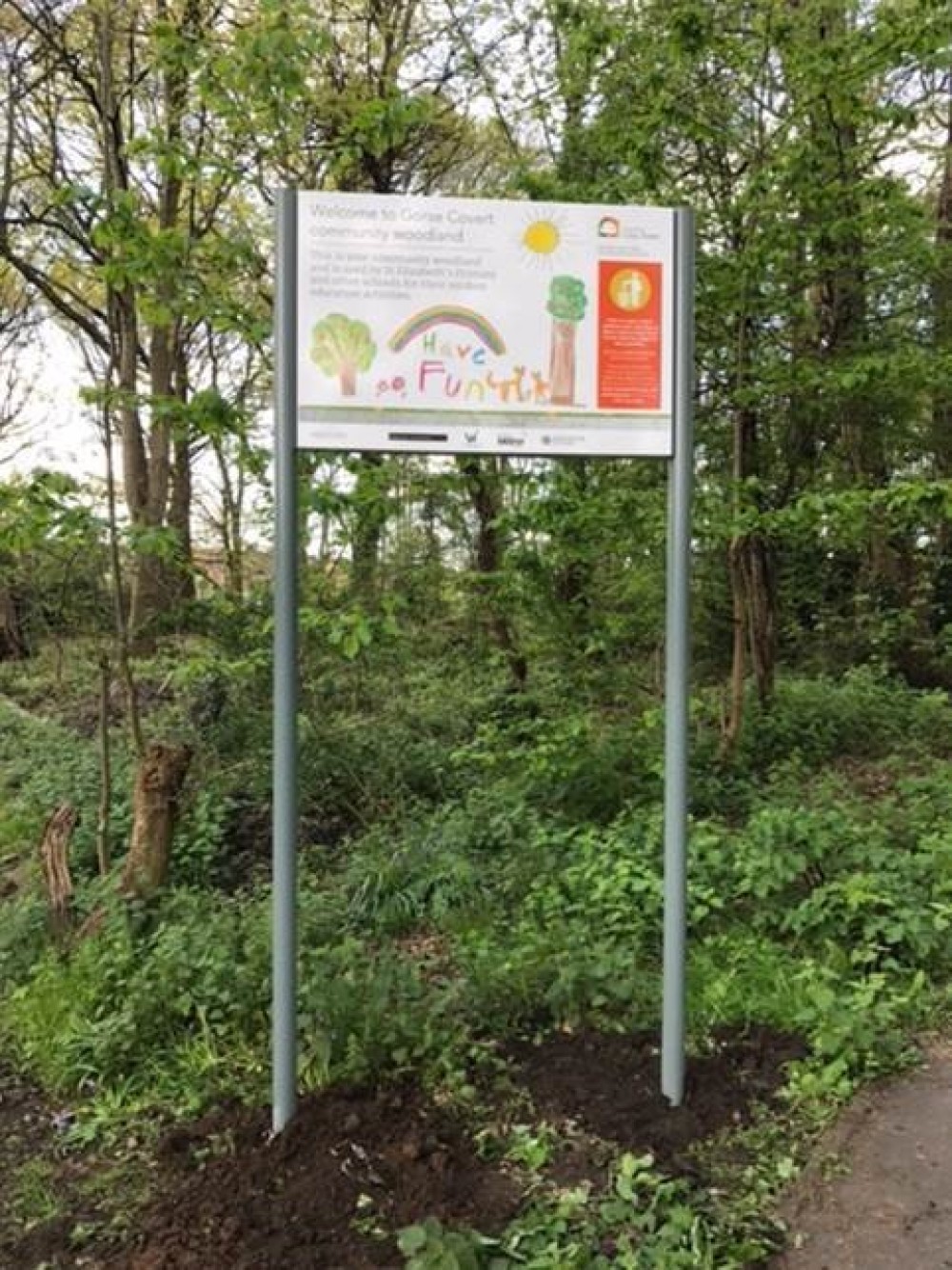
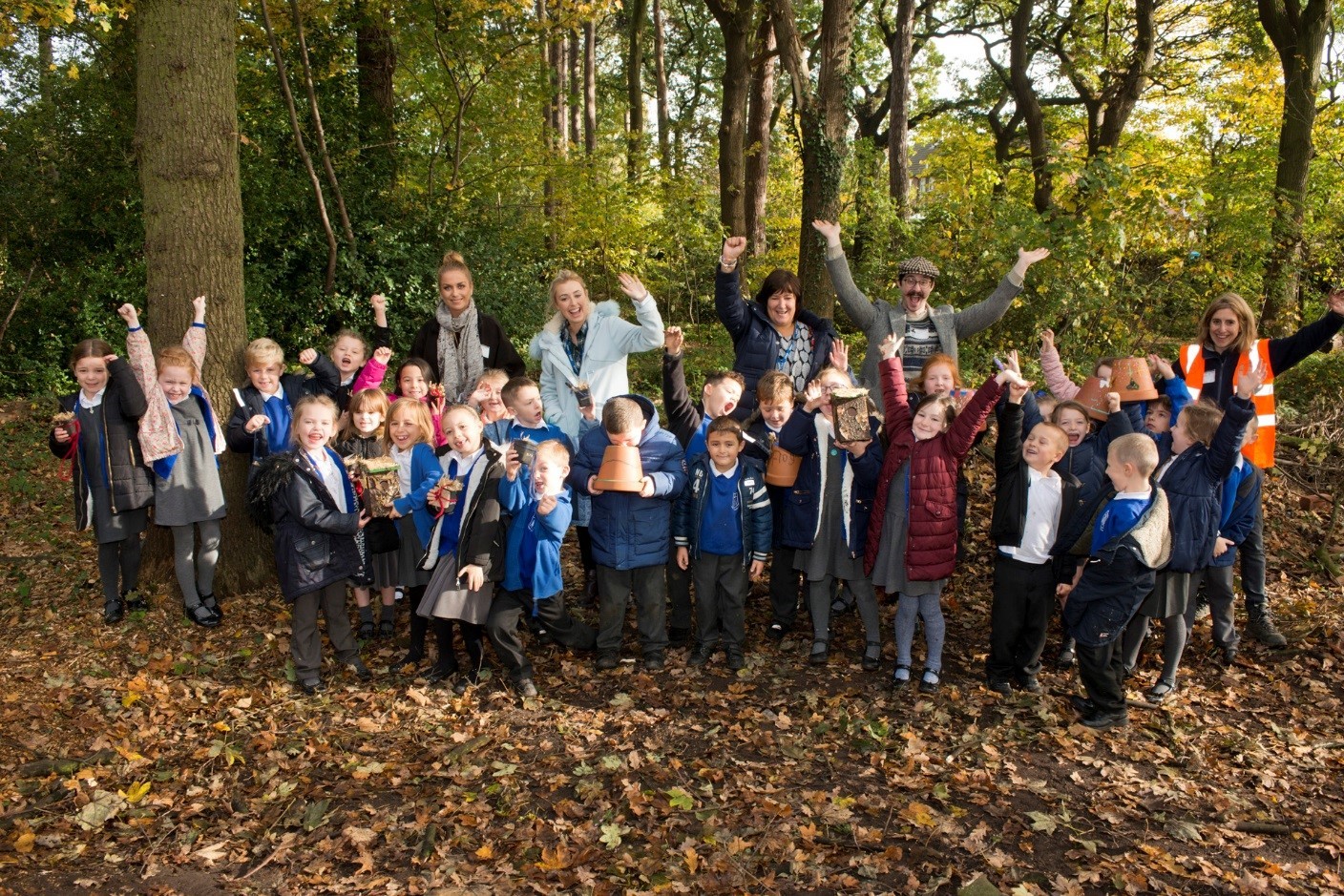
Bryan focused on Gorse Covert, Wythenshawe, as a successful case study. The regeneration scheme was financed by a few small funding pots, including a local authority social housing provider and house builder Stuart Milne Homes. With a school next door to the woodland, it was hoped pupils would provide ongoing interest in the project. Once full of brambles, litter and fly-tipping, the woodland has been reinvigorated by the efforts of local residents and other volunteers, and now provides outdoor learning opportunities for the school.
Improvements have included woodland management sessions, tree and bulb planting, litter-picking, the surfacing of an informal footpath, repair of street-lighting and the installation of rubbish bins. There is also funding for an outdoor classroom, and signage designed by the schoolchildren has recently been installed. Gorse Covert was recently judged by the Royal Horticultural Society for an award for North West in Bloom. The success of this project has been instrumental in securing some Heritage Lottery funding to continue the good work of engaging local communities with their woodlands in Wythenshawe.
I thoroughly enjoyed my day with the City of Trees team, with the feeling that I had learned a huge amount about how we can all engage better with trees. I am, however, at a loss to understand why there are not many more similar movements operating throughout the UK.
Other Images