Hurricane recovery programme: BVI 2018
By Kevin Martin
2018-07-30
As part of the team at RBG, Kew, I get to participate in some international projects. In what seems an age ago, I wrote, back in June, about an expedition to the British Virgin Islands. These islands suffered colossal devastation with a hurricane, and I was to lead a party of arborists undertaking some recovery work.
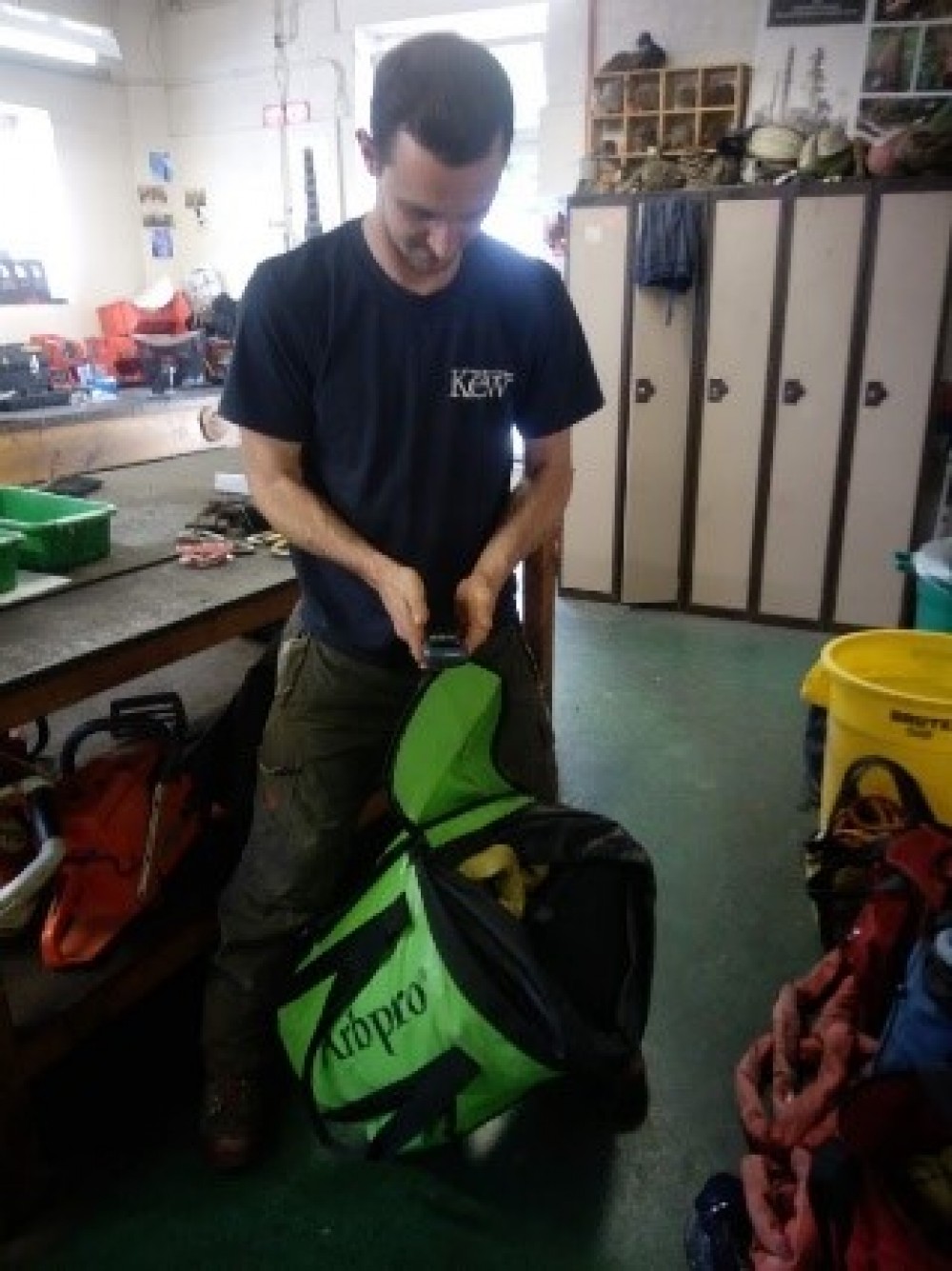
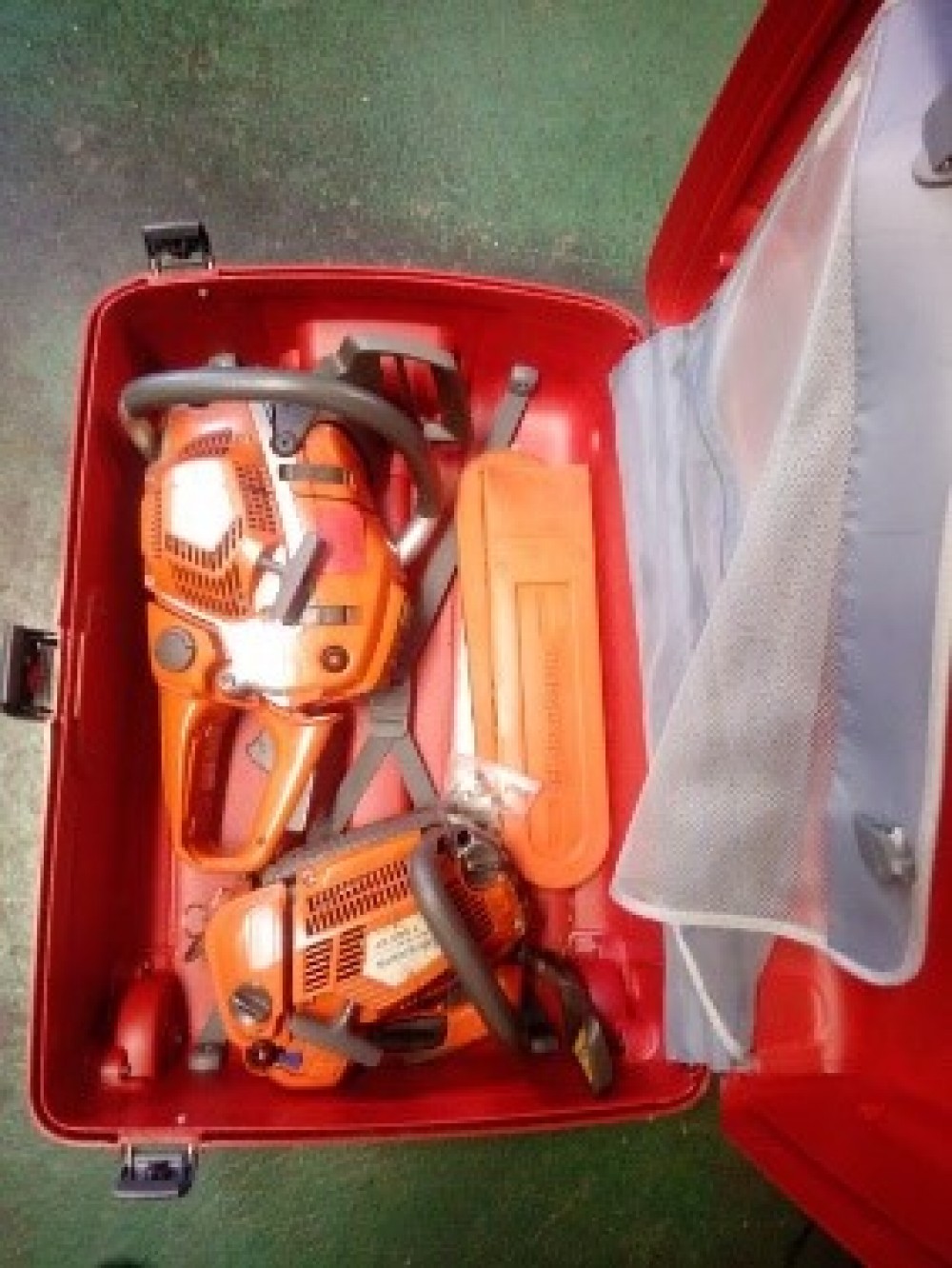
This interesting trip started with an early morning rise to get to Gatwick airport with all our equipment. With travel links to the British Virgin Islands being limited, we needed to take all our equipment with us as luggage. Not only did we need to take two weeks supplies of food and clothes with us, but also climbing kits, rigging kit, and three chainsaws along with all our safety clothing.
You will appreciate that this is a lot of luggage to haul through the airport and to check in. We only had a small budget to allow this trip to happen; the funding was from Joint Nature Conservation Committee- (JNCC), the adviser to the United Kingdom Government on nature conservation issues at the Great Britain, United Kingdom, and European level. With the British Virgin Islands being one of the UK overseas territories, JNCC also oversees work in this area too. As one can imagine, a sizable percentage of the budget was absorbed by flights and accommodation, leaving a small amount of budget for baggage and food.
To allow this trip to be successful,l we really had to think carefully about what equipment we would take. We needed to reduce the amount of rigging equipment we would take. We had seen photos of the damaged areas prior to our trip, and had to rely on this limited perspective. Despite the scale of the operation ahead, we could only take three chainsaws, so there was careful consideration of what would be most effective. In the end we settled on 2 top hand pruning saws and a medium ground chainsaw which we could utilise for several tasks.
After a lengthy time at check in we were set to go!! We had an 8-hour flight to Antigua, and this would be our stop over for 24 hours. Our main concern at this point was that our bags would be check in all the way to Beef island, Tortola. This would avoid having to check in all the luggage in Antigua. The following morning, after an overnight night stay in a hotel, we once again boarded a plane, this time to Beef Island international Airport. What we in Britain would describe as an international airport is rather different to those in the Caribbean. We left Antigua, stopping off at St Marten island on route in order to off-load and collect passengers whom were on route to Tortola.
On Arrival at Beef island international, we collected our hire car for the next two weeks. We were pleasantly surprised that this car had a dent in every panel, missing wing mirrors with other minor damage, was not working and they were trying to fix it in car park of the airport, including trying to source a new battery. After 2 hours waiting at the airport for our (pre-booked) car to be road worthy it was time to set off to our base for 2 weeks. To say it was an unforgetable experience is an understatement. The roads are extremely steep. There are very few bylaws and no road signs. The roads have not been well maintained and there were the biggest pot holes I ever seen in what is meant to be a main road!!! With the locals over taking on a blind bend and stopping in the middle of the road without any warning, well… it was a very exciting welcome to the BVI.
Our directions to the hotel were detailed: keep the sea on your left and the mountains on your right and keeping driving until you come to Nanny Cay. With such detail, we did actually make it to the hotel. On our travels to the hotel, the whole team began to appreciate the amount of damage to buildings, boats, and vehicles. It became very apparent that our hire car was in good condition compared to others on the road some having no windows, bonnets, and dents. These cars would not look out of place in a scrap yard. Our hotel was one of only a handful of hotels open and even then, only half the rooms were usable. The roof still had plastic sheets on to make them weather proof.
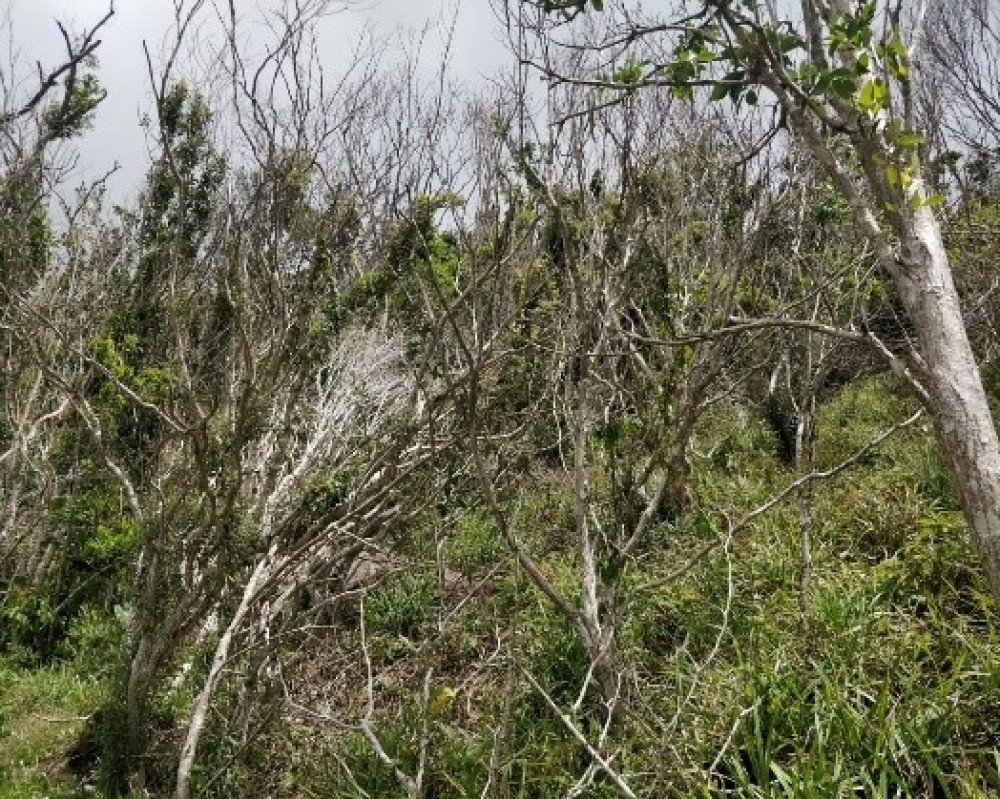
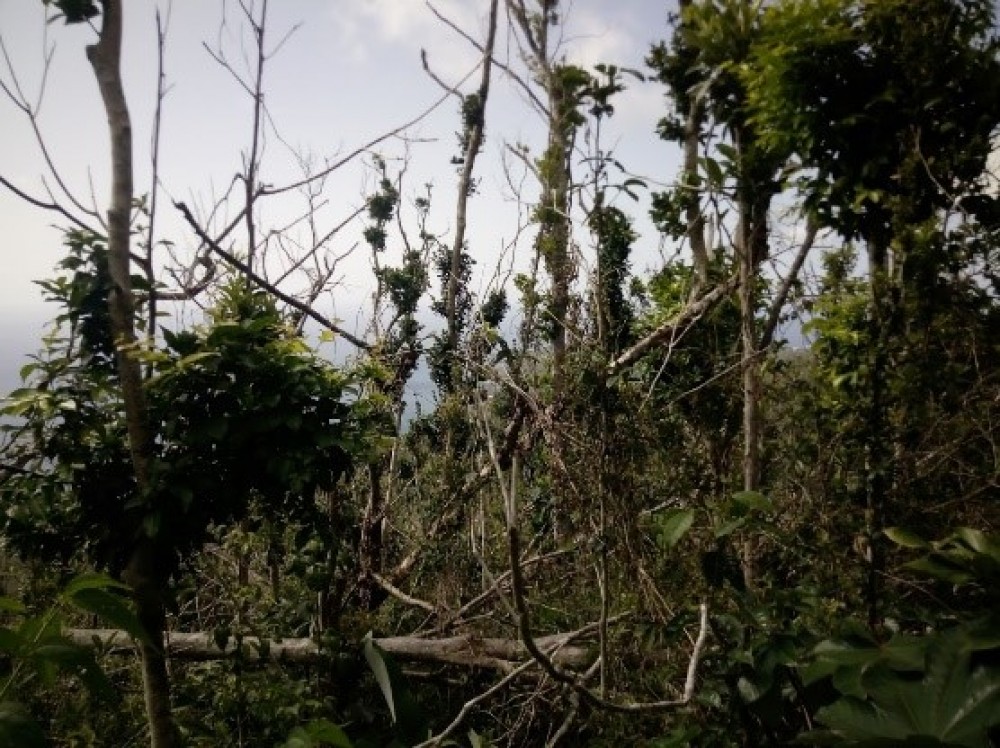
We arranged to meet Kew colleagues from science on our arrival with a mobile phone left at reception. So once settled in, it was time for a freshen up and off for dinner with our colleagues where we would discuss the next few days and how we are going to attack this trip. It was decided we would visit the national park, Sage Mountain first. My first impressions left me stunned. I could not believe the amount of damage caused to this rain forest.
Hurricane Irma hit the island from the north with the eye of the storm passing over, which then passed over the island from the south. Interestingly the native trees managed remarkably well, and it was the planted West Indian and Honduran mahogany trees (Swietenia mahogoni and Swietania macrophylla) which were most affected. With the loss of the canopy to the north side of Sage mountain is going to have a multitude of impacts to the local environment, ecosystem and biodiversity.
The most significant effect will be the loss of habitat which can lead to the loss species. As with any ecosystem some individual species may be intolerant to loss of a particular tree. The loss of species can have a wider affect to the surrounding ecosystems, as food chains often cross ecosystem boundaries with the large amount of canopy loss, it will cause evapotranspiration which is the loss of water from the forest back to the atmosphere. The loss of this canopy disrupts the water cycle causing, in extreme circumstances- less rain fall causing drier conditions over broad surrounding areas. This can lead to drought conditions. This loss of moisture can lead to a deficit in recharging water tables which in return can affect water flow into rivers and other water ways. This loss of canopy cover can lead to an increase in the risk of flooding and erosion of sediment into rivers (Johnson, 2017).
With Sage Mountain being of dense canopy prior to hurricane Irma, this new loss of canopy will affect light levels to the understorey of the forest. Exposing the organic layer to sunlight will cause the loss of nutrients and moisture. With the raining season this will cause dry soil to be washed away due to the lack of root structure and water take up from established trees. If soil loss is drastic this will impact the re-establishment of the forest.
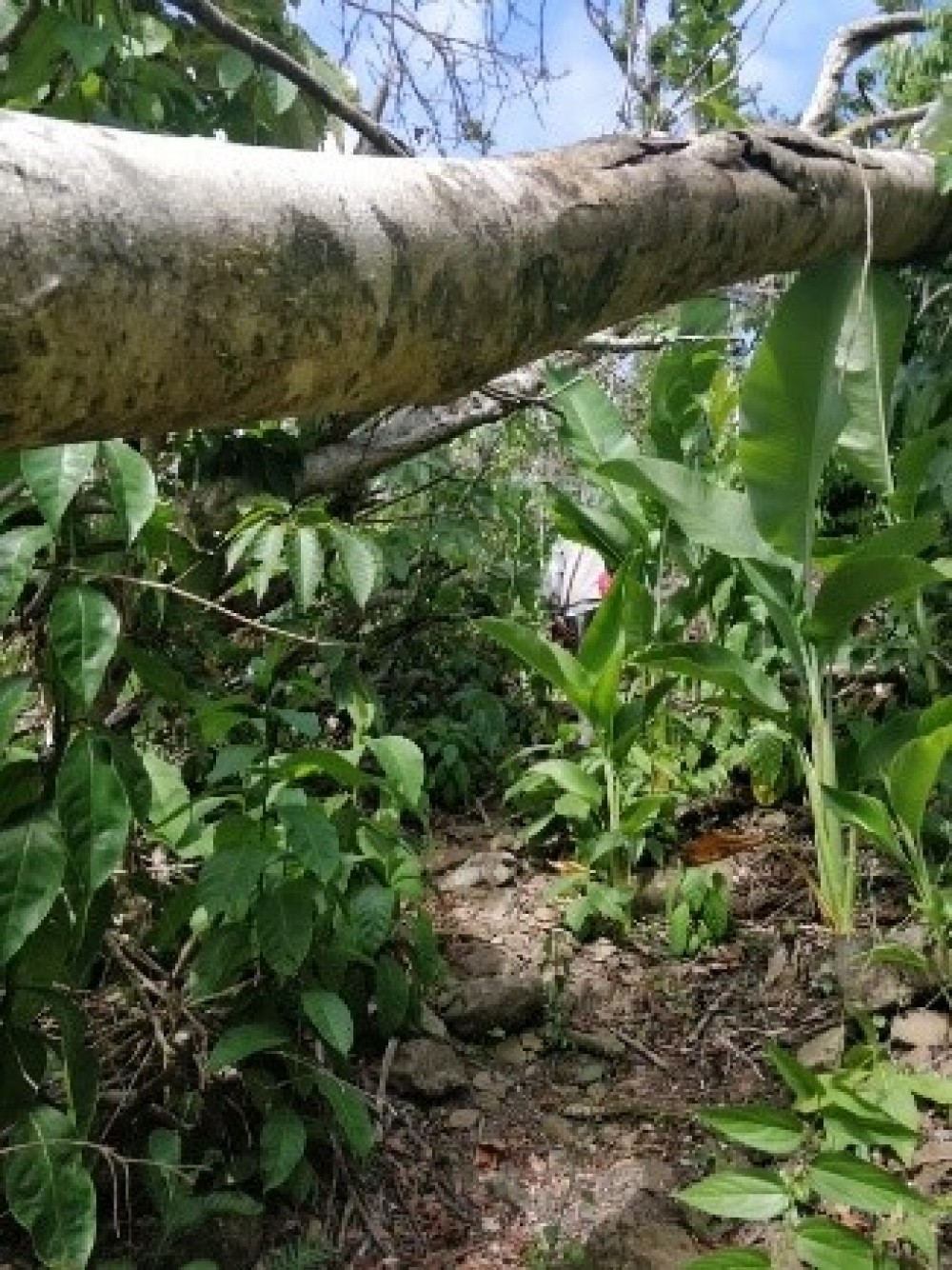
Now as with so many things in the Caribbean, the focus is on tourists. With Sage Mountain being one of the must-see destinations, with trails all through the mountain, the effect of hurricane Irma is very much still present with mature trees with root heave, full trees still hung up within neighbouring trees over the trail and with large broken branches, with hung up trees in canopy of neighbouring trees, all still very close and/or over the trails. The National parks trust have started to make safe these trails however, it was clear to see large amount of high risk trees over the trails which would need mitigation to make the trails safe were still very much an issue.
As part of this trip, my key role was to carry out tree assessments with a view to do our very best to making the trees safe in the Botanic Garden and at Government House. However, I would return to Sage Mountain with the National Parks trust to give some advice on how to tackle Sage mountain.
Next time, I will share about the very special meeting we had to start our stay….
Other Images