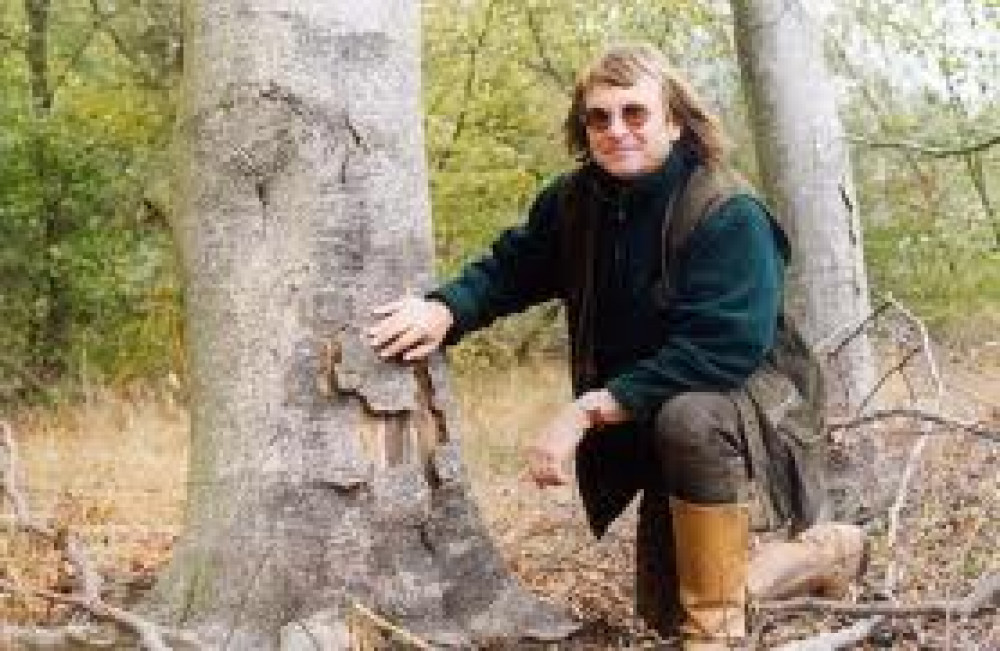
Claus Mattheck….and other events
By Mark Chester
2018-12-17
We are now entering the world of e-learning. In November, we filmed the TPO course. Next month, it will be available to members (and non-members) as both a CPD and competency opportunity.
This year has presented some challenges. We were present at the AA conference. Just not where we thought we’d be. And the planned launch of the CPD facility was thwarted by the poor wifi provided by the University. We were at APF 2018. And in the space we booked. Just without the marque, which took off in the gales. Our attempt to raise money for Fund 4 Trees through a darts game was blown away. Next year. Hopefully.
As I conclude my reflections, I ponder one of my own highlights of the year: The Professor Claus Mattheck lectures at Loughborough University. Normally, the weekly technical piece is only available for members. Today, I’ll share it with all of you. And it can be several pages in length. I’ll keep it brief. It is the week before Christmas, and I’m sure you are busy. So here are my own thoughts on what I learnt from Claus.
- Whatever someone says, does it correspond with your own observations? Claus emphasised that it shouldn’t matter what credentials someone has, even being a professor. If what they same isn’t backed up by the evidence, be prepared to challenge it.
- Claus has so much to share, it is like a gourmet ten course meal. He has new ideas, and is updating existing theories.
- VTA is a work in progress. It has changed over the past decade. He has seen a few thousand more trees in this time!
- If a tree isn’t under stress, we shouldn’t expect to see evidence of it responding to stress.
- The Chinese moustache has entered the arborist’s vocabulary.
- Claus is, at heart, an engineer. But he is passionate about trees. And his talks about trees were more engaging to the arborist audience than those on engineering!
- We should trust our gut instincts. Ecology is important, but keeping a tree that is unsafe close to a road or footpath just to provide a home for beetles is not sensible.
- The t/r 0.30 ratio is a guideline and not a rule. It should be applied with great care to veteran trees where crown reduction may have already happened.
- The tapping hammer is useful, but we shouldn’t condemn a tree solely on the basis of this tool.
- This might have been Claus’ final UK tour, but he has lost little of his energy and drive. The breaks were for our benefit. He has invited us to visit him in Germany. It would seem that travel, cancelled flights and being away from home were the main reasons for this being the last tour. I am currently exploring the feasibility of taking a UK group to Germany. At the moment, I don’t know what the costs would be, and if it is feasible. But if it is…. Interested? Drop me a line at mark@consultingarboristsociety.com.
I’ll conclude with a thought from Professor Lynn Boddy, who combines both the intellect of the academic and the gifts of excellent communication. Commenting on CODIT, she said, ‘Of course it doesn’t work. Dysfunctional wood cannot respond to decay. The tree isn’t responding to decay, the fungus is finding a hostile environment. But don’t forget that we have access to technology that wasn’t available ten years ago. We can look at structures in more detail’!
The importance of trees is higher on the agenda than ever before. We now have the first Tree Champion in Sir William Worsley. Our understanding of how they function is greater than ever before. Great times to be an arborist.
Enjoy the break and I’ll see you in the New Year