CAS at Windsor Park: A Preview
By Mark Chester
Ahead of the Consulting Arborist Society visit to Windsor Great Park in October, I got to meet with Ted Green and enjoyed my own tour of part of the site. We could have explored more, as one can spend several days here and still find treasures anew. Ted knows the site as few others. He has lived within the shade of the Park since his family moved here when he was a toddler, in 1939. Our focus was examples of veteran tree management. What follows is a review of my tour. We will be looking in more detail at specific elements during our CAS visit.
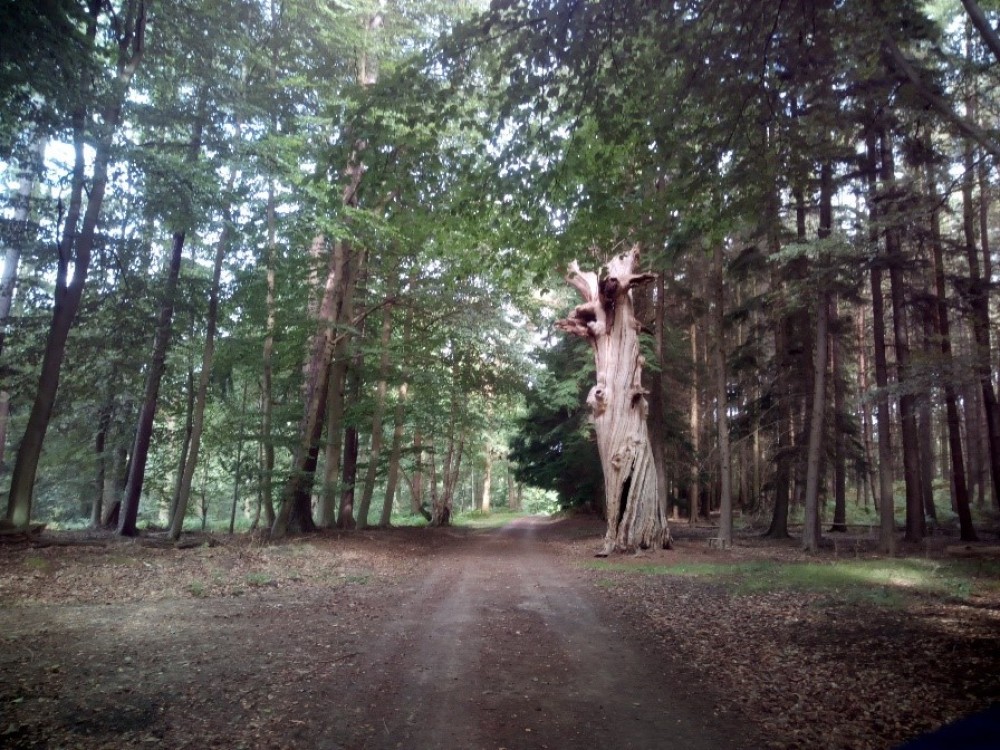
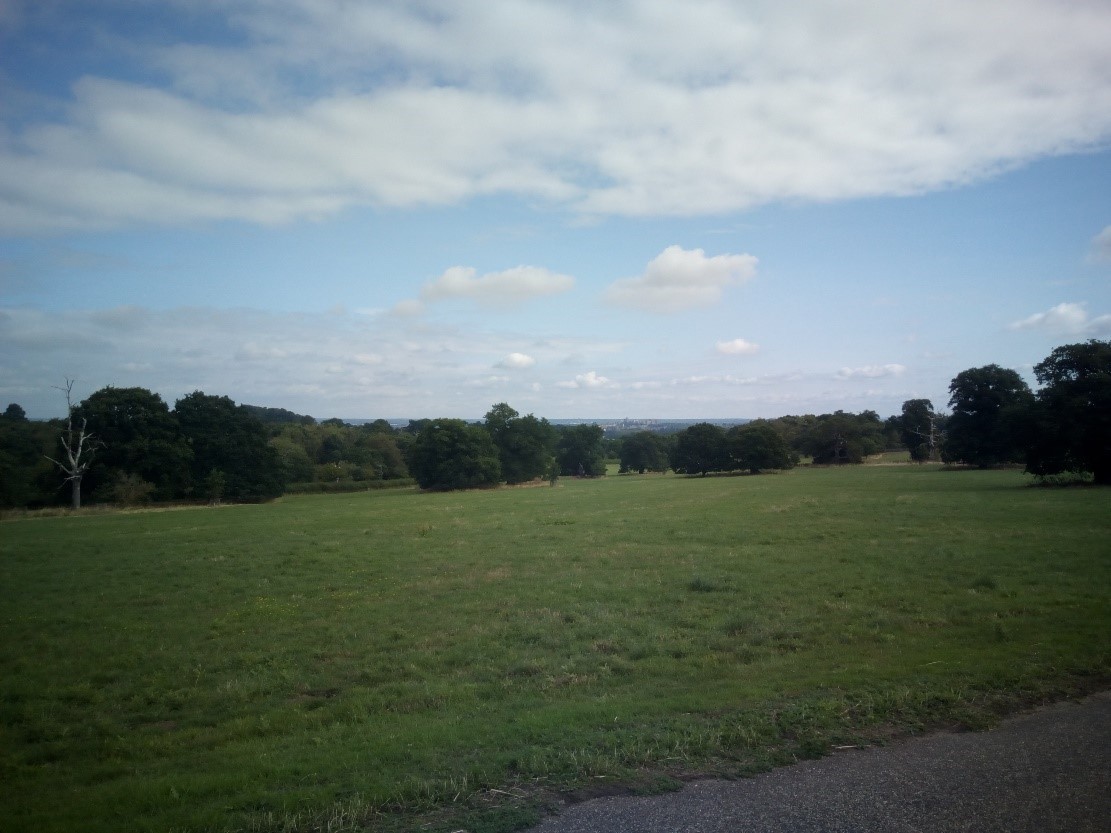
Ted took me along a row of oak trees, one of which recently died. It was subject to a ring count, and found to be 360 years old! The evidence suggests that it may have been planted by King Charles ll. He famously fled Cromwell’s army by hiding in a hollow tree, and thus gained a life-long gratitude to trees. As he left France, he instructed his bursor to bring a large box full of acorns across the channel. Charles ll proceed to plant many oaks here at Windsor and whilst none of them is an ancient specimen yet, some have veteran features and they reflect the connection with history. The view below is one which is unchanged for 1000 years (except for the road!). Windsor Castle is in the distance, and it is possible that Willian the Conqueror may have paused here to ponder where to build his new abode.
PICTURE 1
The terrain is scrub. We sometimes think that a forested landscape would have been covered with forest, and the early settlers were responsible for the clearances. However, we now appreciate that whilst there were dense wooded areas, wood pasture was also extensive. Clear areas were needed in order to hunt on horseback. There are diary records of it being possible to ride from Winchester to Windsor through the continuous shade of oaks! Windsor Great Park itself was vast, stretching from Bournemouth to Swindon, and Oxford in the North.
As we passed through this area, Ted paused by a younger Turkey Oak. Turkey oaks have become prolific in recent years, and as hosts to the Knapper Gall, are a threat to biodiversity. The Turkey Oak is not native. It grows more quickly and larger than our native oak. The Gall can cause up to 90% of the English Oak to fail. When that happens, the Jays plant Turkey oaks, not English Oaks, in the soil, exacerbating the problem. Students from Merrist Wood College have been working for some years now in collaboration with the team at Windsor to remove the Turkey Oaks. Sometimes, there is a need for focus in order to manage the diverse ecosystems here!
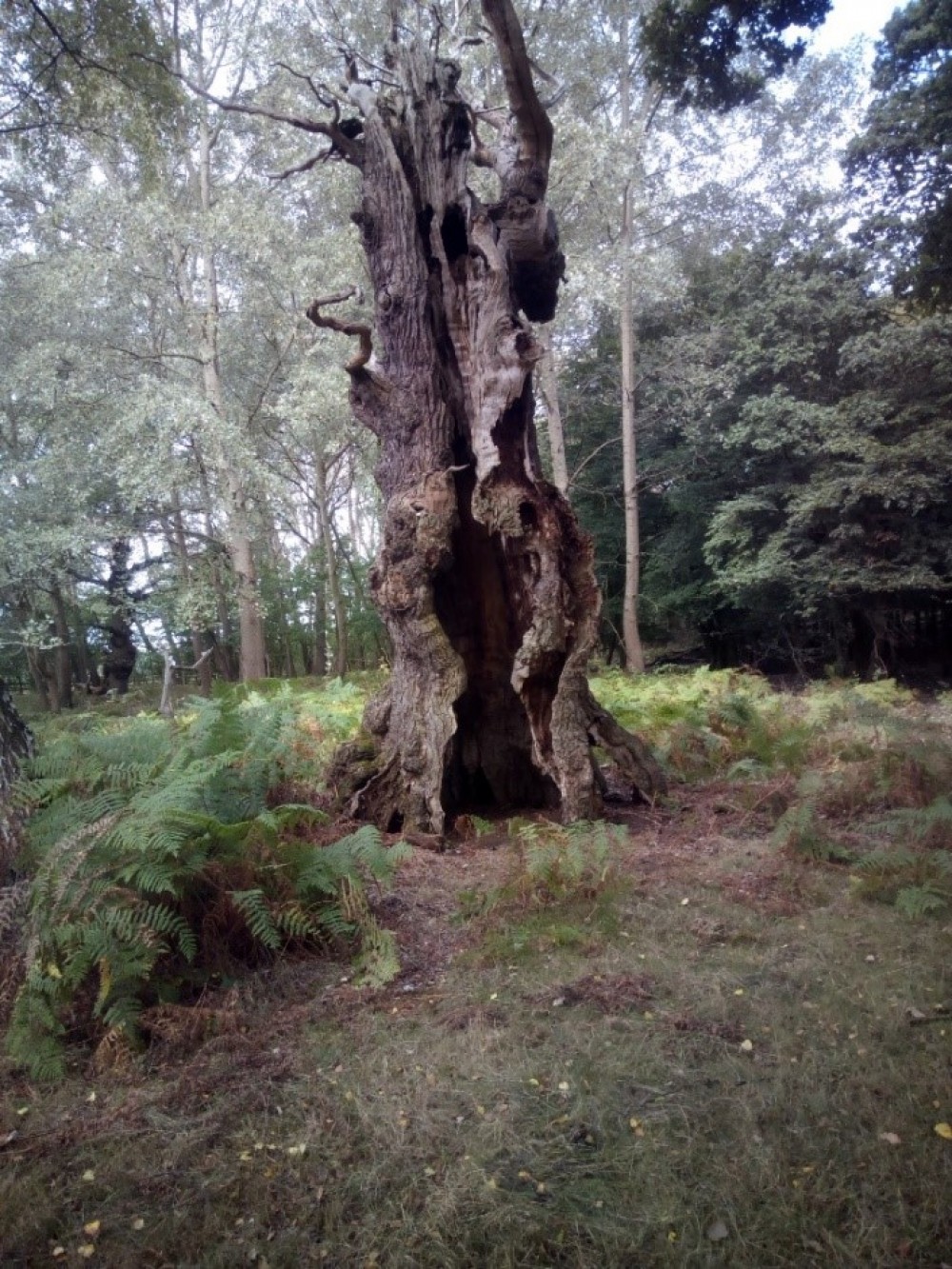
PICTURE 2
This view shows how the Park has been managed in the last century or so, with commercial timber production becoming more of a priority.
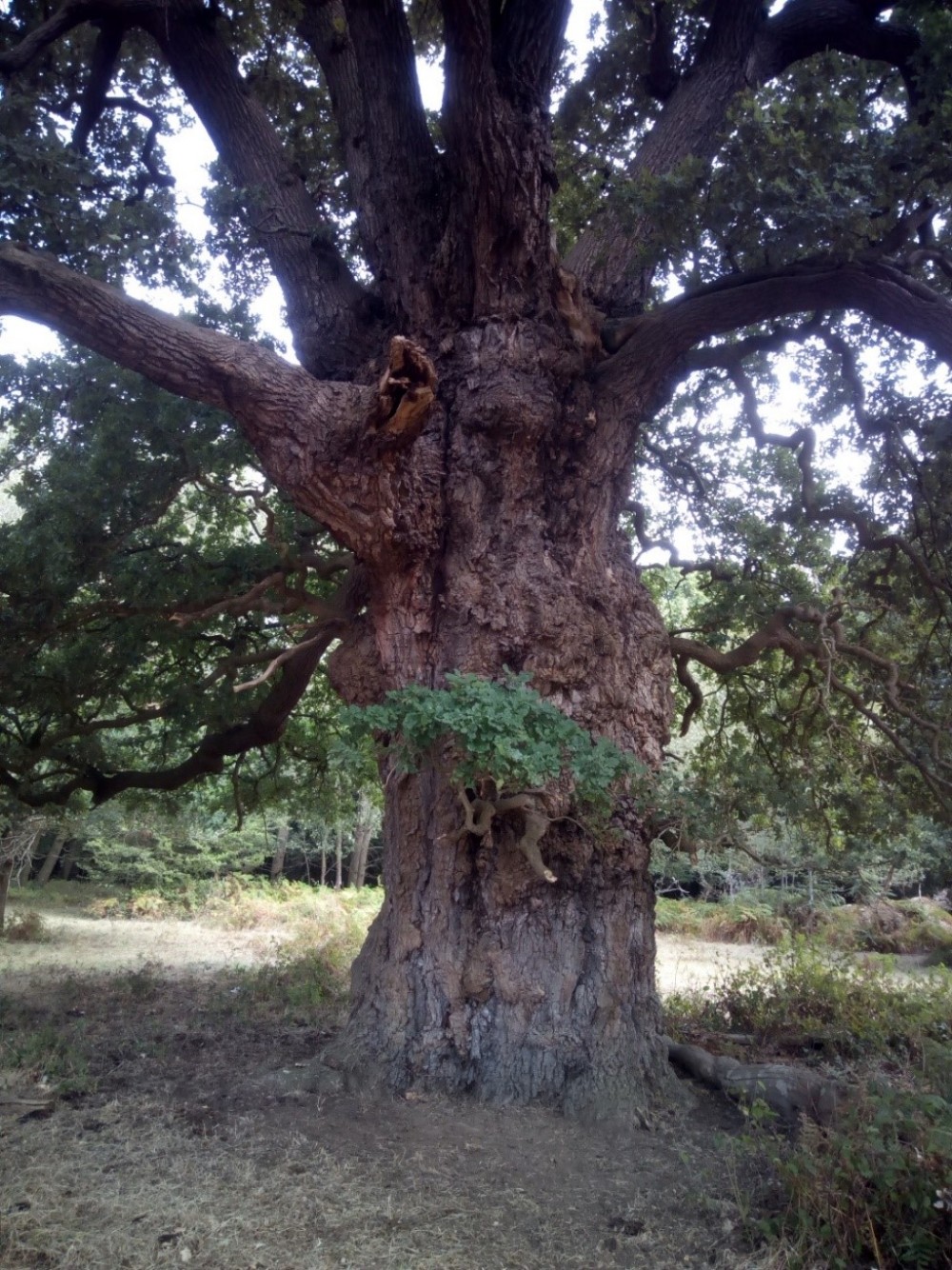
Ted then took me to a rather special part of the site, where there is wood pasture. Wood pasture is rather special. In fact, it has been described as the UK equivalent of rain forest. The wood pasture Ted showed me is unchanged. It has only ever been grazed. It is now being grazed by rare breeds Longhorn cattle. In the midst of this are some hollow ancient trees, including the one below.
PICTURE 3
To a forester, a hollow tree with fungi was traditionally viewed as being in decline, not to be retained. Fungi was associated with decay, and deemed a threat. However, as Ted observed the trees around Windsor, he began to ponder the many hollow trees around him. Having spent decades exploring the grounds, these trees didn’t seem to be particularly in decline to him. Few people were listening to him. His was a lone voice. Then came the storm of October 1987, an event which transformed our understanding of trees. Ted was commissioned to walk the grounds and note what damage had been done. It was soon clear to him that the hollow trees remained largely unaffected, and it was the younger, solid trees that were on the ground. A hollow tree is a happy tree, as we now say. His reflections began with the tree above.
Nearby is a tree Ted has nicknamed The Attenborough Tree. Sir David Attenborough was filiming for his series ‘The Private Life of Trees’. Ted’s theory was becoming accepted, and more widely disseminated. Sir David climbed in to the tree, peered out from a hole, and spoke to camera. With his theory at last being recognised, with a glint in his eye, Ted pondered to the professor with whom he had worked on numerous projects, whether his pioneering work could merit a PhD!
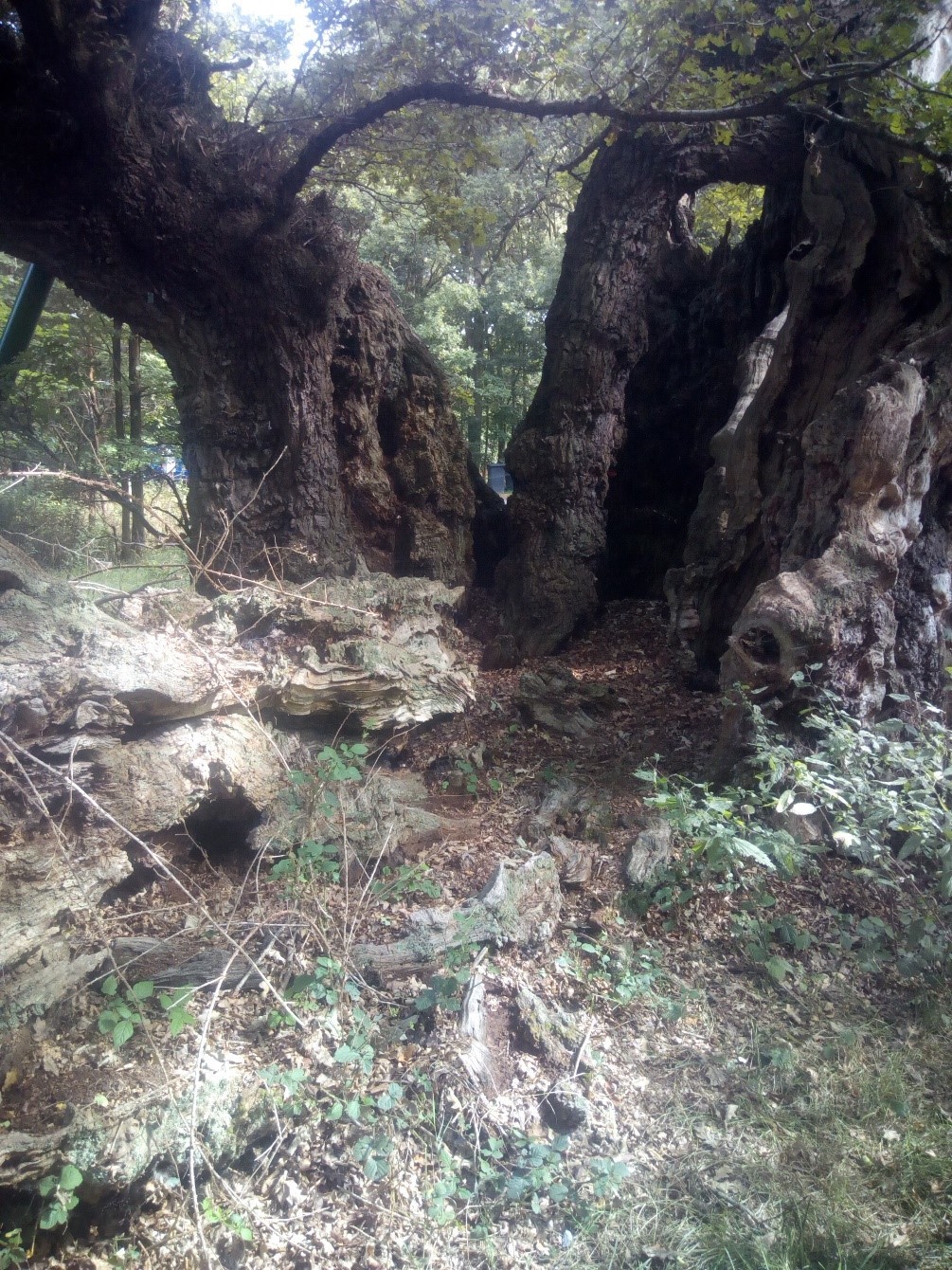
This corner of the site contains numerous treasures, and as we explored further, Ted pointed to the tree below. He had become very familiar with it, and was exploring some archive material when he found a line drawing from 1815, of this tree. The tree is unchanged in more than 200 years!
PICTURE 4
We moved on an ancient oak pollard. As this tree has matured and aged, it has formed columns, which Ted refers to as ‘Lonsdale Columns’, after Dr. David Lonsdale, who made the observation. Spending time with Ted, one soon appreciates how he is keen to attribute contributions made by others to them. He may have the original idea, but if someone else has done the leg work, he wishes them to be credited!
We plan to look at this tree during our visit. The roots have been carbon dated to more than 1000 years old. It has been mulched with bark and leaf litter, and the ground was soon vibrating with the activity of worms and other invertebrates. It is interesting that when the same treatment was applied to the Major Oak at Sherwood Forest, the result was less animated. The compacted ground there would seem to have limited biological activity.
PICTURE 5
In part ll, I’ll be looking at the forest nursery, the William The Conqueror Oak and pioneering work on insect habitats.
Other Images