ATF Summer Conference 2018. Hereford
By Mark Chester
The conference was opened by session chair Chris Knapman, who began by pondering ‘what is the ATF’? In a light hearted moment, he shared that he had been exploring definitions on-line, and found that it could be the American Truckdrivers’ Federation, among others. He also wondered whether it might be ‘Ale, Trees & Food’, which sounded good to him.
Chris introduced Archie Miles as the first speaker. He provided a whistle-stop tour of some of the special trees of Herefordshire. Archie is a really engaging speaker who can hold an audience for an extended period, and his time was over too soon. He shared some of the challenges he faces, such as lighting when photographing Yew, and getting out to visit treasures before they are lost. On one occasion, he photographed a tree and was unaware of the feline guest who was captured in the image. Several years later, he was contacted by the owner of the cat, who had found the postcard made from the image. The cat had since passed away, and the owner wish to purchase many copies of the postcard to send to friends and family!
Reg Harris followed. He is happiest when working in trees, and is often working on veteran trees. There can be a problem when working on lapsed pollards, which may have little growth on the bole and thus be ill-equipped to respond to work. He has been exploring ways to encourage regeneration, based on a theory by Neville Fay. Could internodal cuts and a crown reduction phased over several decades be the solution? Reg’s experience was that this wasn’t happening, and instead, localised suckering is occurring, which is not helpful. The third cut is pending for some trees, and Reg’s observation is that this may not be appropriate.
Frits Giellssen faces a very different situation, working on trees in Northern mainland Europe. There are few veteran trees to be found, and much less appreciation for them. The view is often that the tree is old, let’s fell and plant something younger! Bracing is also encouraged, even when it is not going to be maintained. He has found installations that are 40 years old and not touched, even when they should be adjusted every five years! For one tree, he managed to extract 13 metres of steel! Frits presented examples of his worked, and how he is trying to manage older trees.
After a coffee break, Megan Climber shared about Woodland Pasture, why it matters and the challenges of management. Dr. Keith Alexander followed, sharing on his work on the Cosnards Net winged beetle and its presence (or otherwise) in the Wye Valley. His work has been frustrated by how little we know about this beetle. Kylie Mellor then updated on the new website. The original website pre-dated smartphones and the new one is now much more user-friendly.
Victoria Grainger concluded the morning of seminars with an update on her research. She is studying for a PhD on the database of the Ancient Tree Inventory in order to identify gaps in our records. One of the key elements that she is exploring is how representative is the data we have of the national population. Her initial conclusions are that surveying to date has been based on how accessible sites are, and how pleasant to visit, and now on where the major populations are. For example, an area in North Herefordshire has been extensively surveyed mainly because it is a SSSI to which there is public access!
The afternoon visit was to Kentchurch Court. The trip was introduced by the Head Gardener, who explained that the history of the site was quite representative of the UK. Originally a Royal Hunting Park, it was then passed to the Church via the Knights Templar. It was then acquired by the Scudamore family, who have owned it for nearly 1000 years. Management priorities have ranged from pleasure to timber production to manicured landscape. The current priority is for ecology, one which previous generations would have resisted!
One of the memorable features is a group of Scots Pines which were, apparently, a sign than Jacobites would be welcome!
Rob Jarman opened proceedings on day two with an update on his research in to the history of the Sweet Chestnut in Britain and Ireland. He challenged the view that the Romans introduced the tree to Britain, and after an initial intake of breath within the audience, back his thesis with some compelling observations, and reference to the ‘factoid’. Dendrological evidence suggests that many specimens in the landscape today date from the 1600s.
Professor Ian Rotherham shared his work exploring the Lost Woods and un-noticed veteran trees he has identified in his studies, especially within the Peak District. He highlighted that the presence of Bluebells indicates the area was previously industrial, such as charcoal production, as these plants do not thrive in such sites and can only become established when the land has become more peaceful.
Aljos Farjon, an Honourary Research Associate at RBG, Kew, shared about his work exploring the Ancient Oaks in the English Landscape. This is not a work celebrating individual trees, but rather exploring their collective importance to the landscape. There are more great oaks in the UK (those with a girth of more than 9m), about 135, than in the rest of Europe combined (93). He has explored why this is the case. The role of the Royal Hunting Forests has played a part, as has the absence of large scale military action resulting in a scorched earth. Large private estates have played a significant role.
After the coffee break, Tom Joye introduced us to the relatively new science of tree architecture, which includes students observing trees from above the crown balanced on large but precarious platforms. He was followed by Russell Miller, Chair of the ATF, who provided a succinct review of the year, referencing some valuable co-operation between the organisation and the Woodland Trust. This including providing specialist advise on connection with a planning application by the Ministry of Defence which would have damaged veteran trees and was refused. Ensuring a sustainable future for the ATF and enabling the specialists to focus on this and not administration are the priorities for the coming year.
David Lovelace concluded the morning with a whistle-stop tour of some of the ancient trees to be found within the county, and those whose value was sadly not appreciated. This included one felled to accommodate the entrance to the new cattle market; the Council was unable to move the entrance the short distance needed to allow the tree to be retained! He also explored the scope for further surveying of ancient trees and his hope that following the conference, a local branch could now be formed.
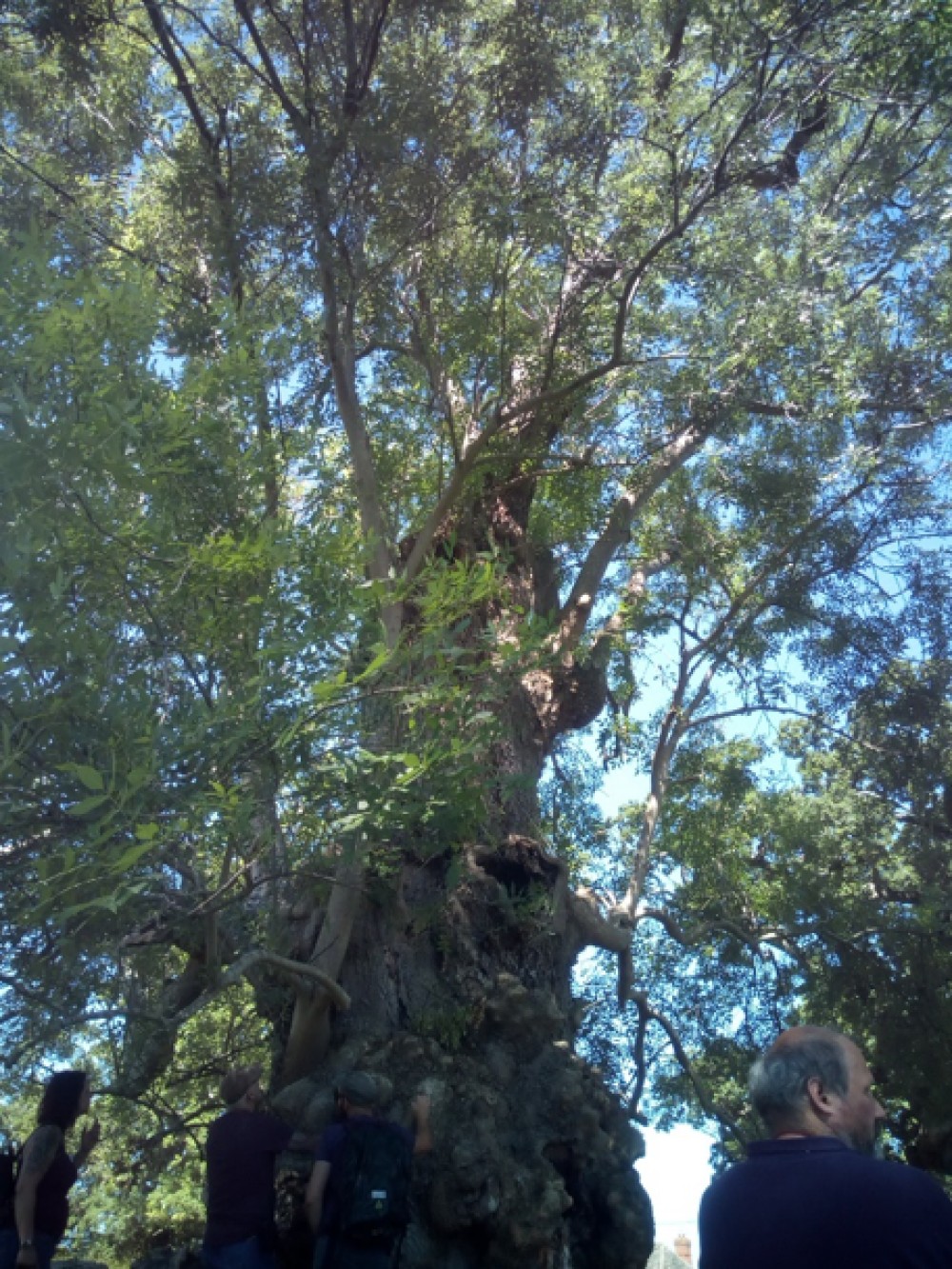
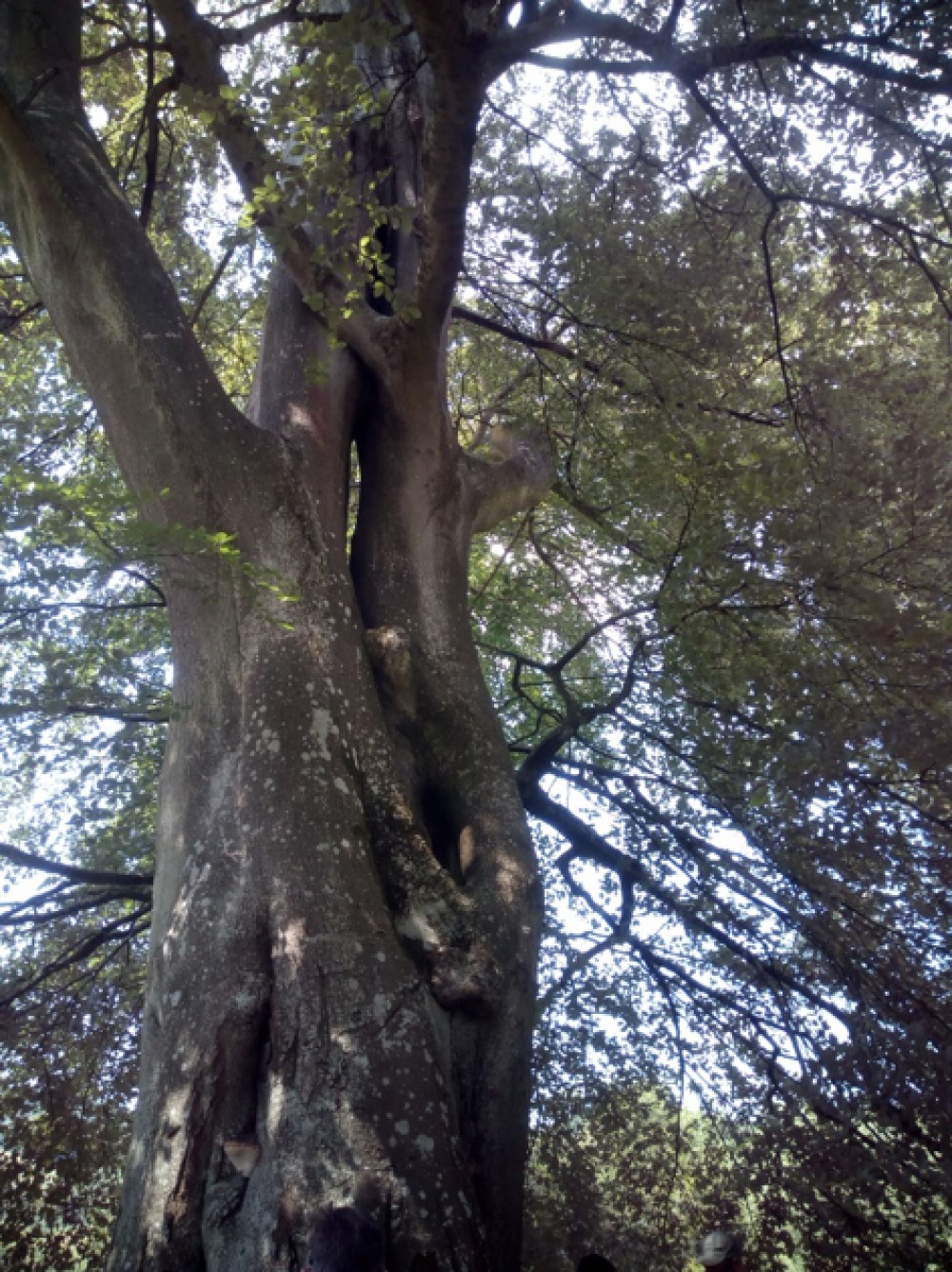
Afternoon visits were made to Holme Lacey, Croft Castle and Moccas Park. I attended the latter venue, which is not normally open to the public. The group visited was treated to a tour of some fantastic specimens, including an Ash with a cavity sufficiently large for me to stand in it and take a photo in to the crown, and the Old Man of Moccas Park, a substantial specimen with cankers, for which an attempt to age proves very difficult.
The condition of this large Beech tree at Kentchurch (pic 1) invited discussions. The ash (below, at Moccas Park) seems to be in good vigour despite the recent loss of a younger branch.
Other Images