ATF Autumn 2019 field visit to Wallington, Northumberland
By Ancient Trees
2019-10-28
It’s becoming the norm now for all our field visits to be fully booked well before the event, but whilst organising our most northerly event in Northumberland, an area not currently covered by an ATF regional group, we didn’t know what to expect! As it was we received an incredibly warm welcome from a professionally diverse mix of individuals (and collected a long waiting list!)
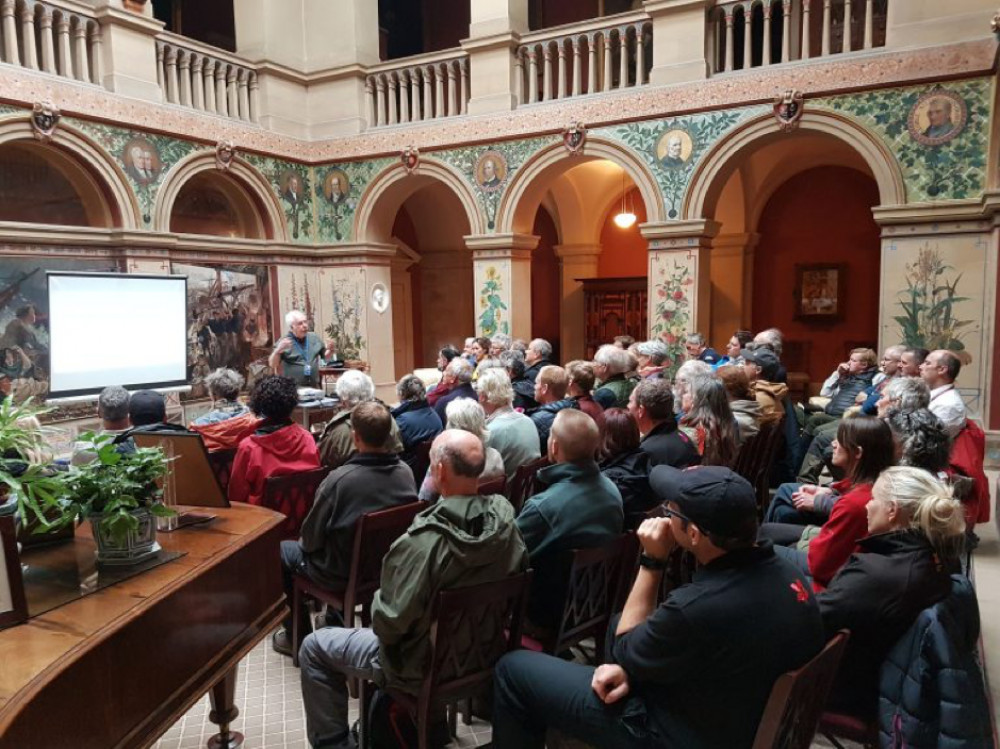
Our host for the day at National Trust’s 8,000 hectare Wallington Estate was Paul Hewitt, the knowledgeable Countryside Manager, who led us into the Ruskinian central hall, with its coved ceiling, balustrade, and wall paintings of Northumbrian history by William Bell Scott, Lady Trevelyan and John Ruskin. In this setting, Paul introduced the estate with its rich history and we knew there would be plenty to discuss with the current 15 tenant farms, 320 hectares of woodland, a village and 40 hectares of rolling parkland. Nick Johnson, the Veteran Trees Project Officer from Northumberland College, spoke to us briefly about his HLF-funded project to identify and record notable trees in Northumberland, which linked up nicely to other ongoing tree recording initiatives with Newcastle City Council, and the national Ancient Tree Inventory hosted by the Woodland Trust. However, we did sense some confusion on the part of attendees between the various inventory projects and the remit of the Ancient Tree Forum. Maybe unsurprising in an area of the country where the ATF hasn’t historically been active – we endeavour to change this!
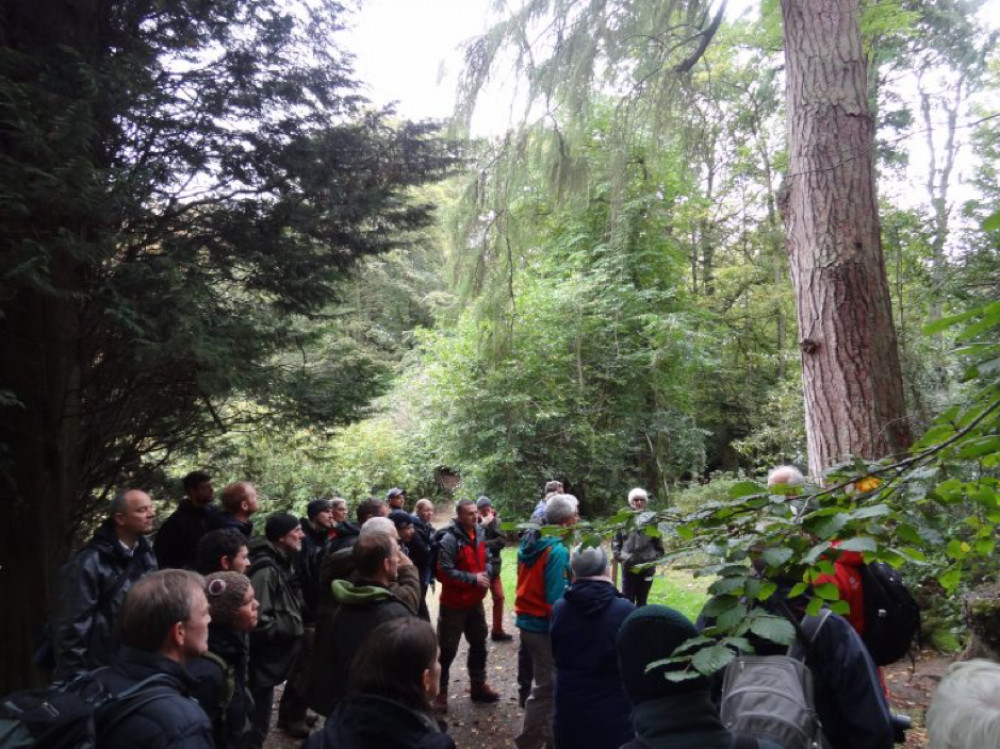
Moving out into the grounds we first walked up through fields to see some veteran beech that the countryside team had left as standing wood. In an area with only moderate public footpath use, the team had designated this
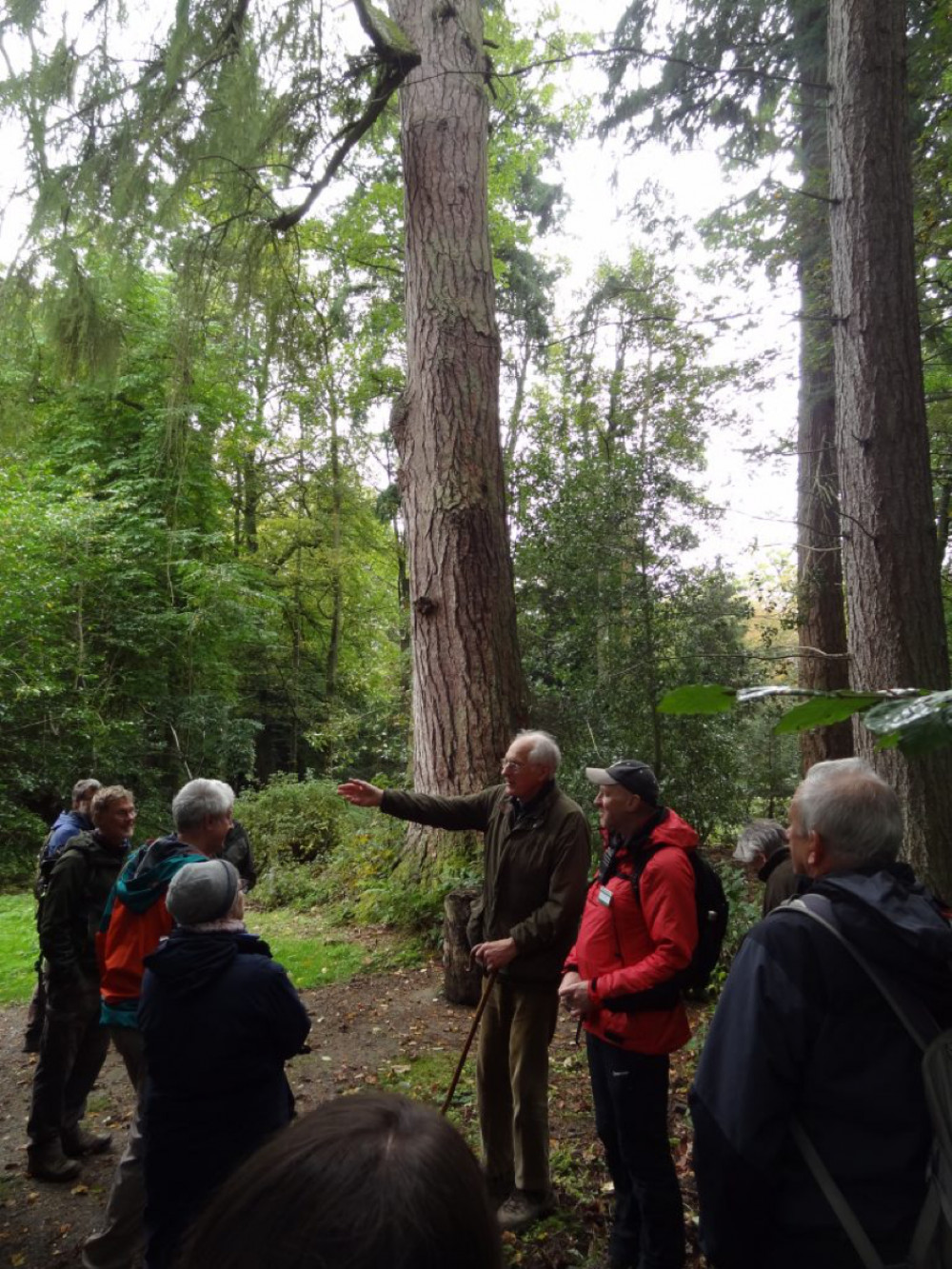
zone of the park as being relatively low risk, and therefore appropriate for retaining these trees. This provides crucial habitat as well as contributing to the visual architecture and landscape heritage. We discussed the perils of removing shelter belts and interpreting historic plans, dealing with infill planting, deciding on spacing between trees, and recognising planted avenues. We then moved on into pasture, where we touched on the definitions of veteran and ancient trees whilst looking at gnarled and hollowed hedgerow ash and crab apple, and on the impact of livestock on soil health, compaction around tree roots and browsing damage. Heading back through the walled garden after some lunch, we learned from Robin Dower of the wonderful stories* attached to some of the specimen and notable trees, as well as the historic ‘Wallington Book of Trees’ and the designed landscape. Robin is Sir Charles Trevelyan’s grandson (Sir Charles donated Wallington Estate to NT in 1942).
Our warm thanks to everyone who came along on Thursday, and to Paul Hewitt in particular, and commiserations to those who remained on the waiting list. Paul continues to record trees on the Wallington Estate, and would welcome any assistance from volunteers (wallington@nationaltrust.org.uk). We look forward to seeing more Ancient Tree Forum events in the north east next year, so those wishing to be involved, please drop us a line!
This included a tale about the Atholl Larch: this tree was planted in 1738 having been given to Sir Walter Calverley Blackett by The Duke of Atholl, the first person to commercially plant larch in Scotland (or even introduce larch to Scotland..?) A consignment of young larch seedlings was being transported from Norway via the port of Newcastle for the Duke of Atholl. They were then to be transported by road to his residence at Dunkeld, Perth and Kinross. Wherever the wagon stopped, a few trees were left for the owners, hence Wallington acquired six. Of the six trees, two survived into the 1960’s and were referred to as the “King and Queen” by Patricia Jennings, the daughter of Sir Charles Philips Trevelyan. Unfortunately, the Queen was demolished by a large Beech tree which blew over in a storm in the 1960’s, leaving the King as the last survivor of six originally planted. Patricia wanted to keep the legacy going so she asked a NT forester to shoot a cone from the tree, and this cone was sent to the Forestry Commission. 15 years later a small tree returned, and this was planted in the East Wood.
Any Other information- anything that may need to be checked or added ect.
Liverpool’s Allerton Oak crowned England’s Tree of the Year
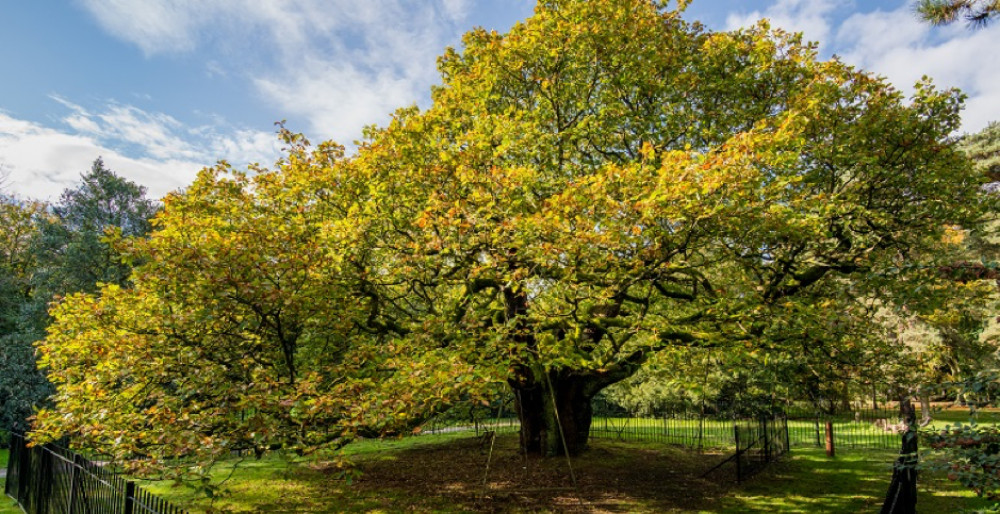
Liverpool’s lofty Allerton Oak has been crowned England’s Tree of the Year.
The tree, which stands in the city’s Calderstones Park received 34% of more than 11,000 votes cast in the Woodland Trust’s annual competition. It will now represent the UK in the European Tree of the Year contest which begins in February 2020.
Adam Cormack, Head of Campaigning, at the Woodland Trust said:
“The Allerton Oak is a spectacular example of a city tree. It has stood in Calderstones Park for centuries and has an intriguing story. Trees are an important part of the urban landscape helping to make our towns and cities better places to live. We are keen to increase understanding of their value and promote their protection. We are currently working with partners to help increase tree cover in the city and make Liverpool a greener place to live.”
The Colchester Castle Sycamore, which grows on top of the mighty Essex stronghold, came second while the mythical Dragon Tree on the Isle of Wight was a close third.
Legend has it that in medieval times the local court, known as a ‘Hundred Court’ would meet under the branches of the tree, as they lacked a courthouse. Today the tree is fenced off to protect it, and its heavy boughs are supported by metal poles.
Liverpool City Council has been working in partnership with The Mersey Forest to preserve the lifespan of the Allerton Oak. This project will secure a new propping mechanism with built in flexibility to adapt as the tree continues to grow and sustain it long term. The council is investing up to £80,000 in this project but the value of the tree is conservatively estimated at over £500,000.
The competition is supported by players of People’s Postcode Lottery. The winning tree will be awarded, subject to eligibility, a £1000 Tree Care Award aimed at protecting, supporting and celebrating a better future for the tree. Awards of £500 will also be made available for the trees that placed second to sixth.
Other Images