A chat with Kevin Martin
By Mark Chester
2021-02-15
Kevin Martin is the arboriculture Manager at the RBG, Kew, where he is responsible for the management of an internationally important and renowned collection of some 14,000 trees. Many are important due to their age, botany or social connection. Over the years, Kevin has made contributions to the pages of the Consulting Arborist Society, sharing both his personal favourites among the many trees and some of the adventures he has had. More recently, as the demands of the role have required much of his time, Kevin has shared updates via an interview. With 2020 progressing, it was time for another chat.
Each time I have spent time with Kevin, he has been involved with a challenge, one demanding much of his energy, focus and desire to defend the collection he is managing. In the earlier years, he was engaged with a legal case involving a coroner following a tragic accident. Oak Processionary Moth was then the subject to focus, as an infestation required industrial-scale intervention. Kevin recalls the team from Bartlett’s Tree Experts coming with heavy duty boiler and large spraying rigs. The efforts seem to have paid off, with only one new nest being identified this year.
In 2019, Kevin found himself in the rare but useful position of being both client and consultant for two developments within the grounds of Kew. One of these progressed smoothly, whereas for the other, a high turnover of contractors requiring his regular input with training. Both projects have been successfully delivered. When it comes to protecting trees, Kevin is a fierce warrior.
2020 has presented both Kevin and RBG, Kew, with some new challenges. I got a hint of this in May when I called Kevin to explore writing an article on soil compaction with him. I was busy at the time with running the Consulting Arborist Society, my own consultancy practice, home schooling and some other challenges. I was behind with e-mails. Kevin answered the phone and apologised for not being in touch. He was so busy at Kew that he hadn’t checked e-mails for some days. Having previously managed a team to lead on programmes of work, as well as surveying the trees and advising on arboricultural issues within the Gardens, Kevin now found himself working alone, with all of his team having been placed on furlough. Priorities were being rapidly re-adjusted.
Fast forward six months, and time for a review. How has the year gone? Kew Gardens have been hit by the COVID lockdown. In 2019, more than 2.2 million people visited the grounds, and these visitors are an important source of the revenue that funds operations. The Gardens closed for 10 weeks in the spring, and key fund-raising events such as the Christmas lights have been cancelled. Budgets have been adjusted accordingly.
At the time of talking, the winter lock down has resulted in Kevin being furloughed for part of the week. How is he managing? Fortunately, Kevin is able to pull on the efforts of previous years, and he has personally inspected all 14,000 trees, and is able to prioritise those with more urgent safety issues.
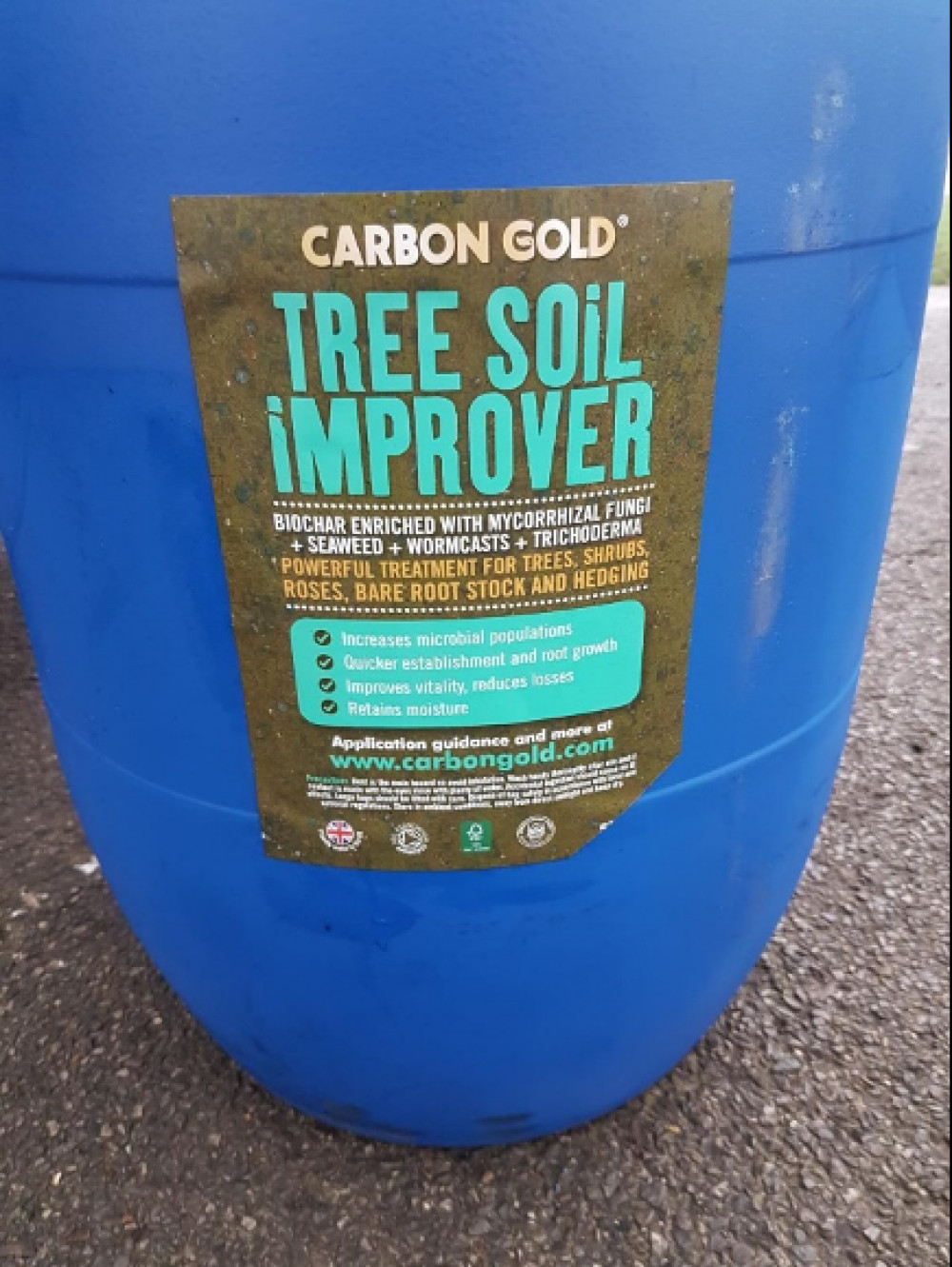
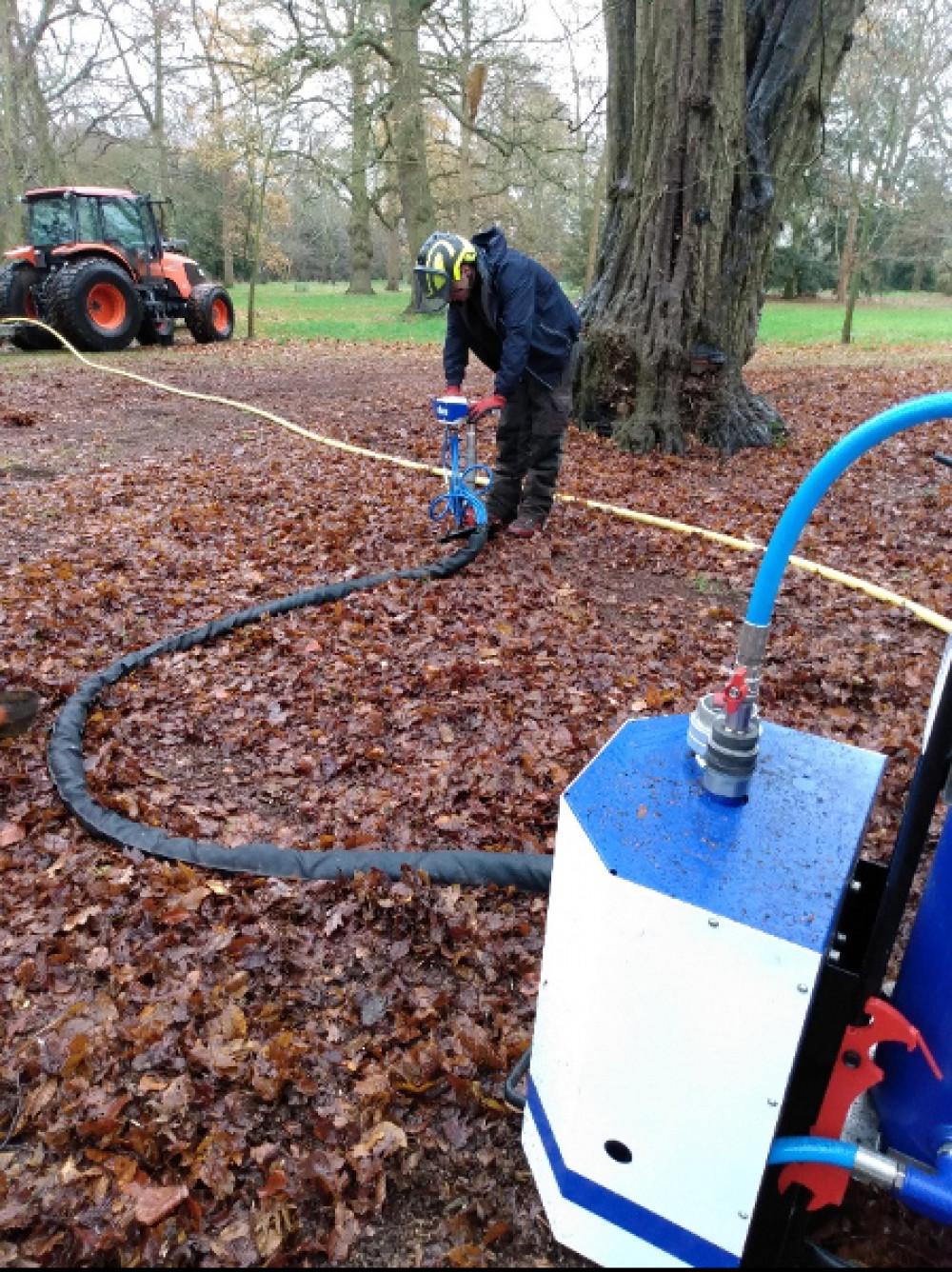
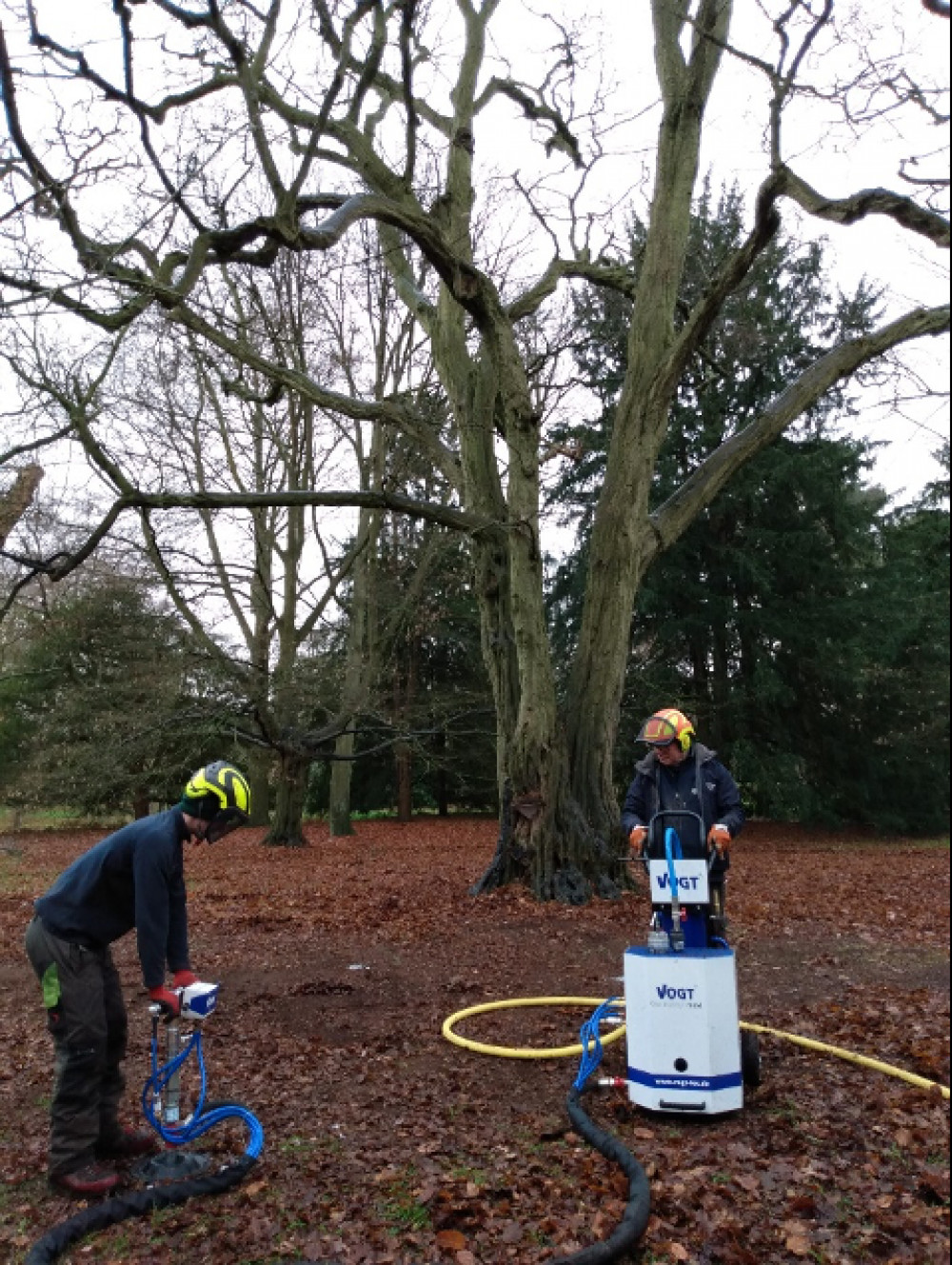
Compaction is one of the great challenges Kevin faces, and one of the benefits of the reduced visitor numbers has been a reduction in compaction around the trees. He has also been able to make good use of a soil injection tool that was acquired last year, which is enabling him to get solutions of nutrients injected in to the soil around trees under stress. He is relieved that the investment was made in 2019, as there are no funds for such items in 2020. The benefits of the treatment are becoming evident.
Kevin flows with ideas. One of these is exploring the conditions conducive to enabling young trees to flourish post-planting. He is keen to work with others on researching this as well as recovery from the compaction associated with construction activities.
Kevin sees RBG Kew as a living tree museum, and it is a collection where he is keen to keep access as open as possible. Benches are regularly moved away from trees and those trees that are particularly important and under stress are fenced off. However, longer grass seems to be a better deterrent.
Normally, when I have these chats with Kevin, I will close the time by asking about plans for the coming months. Previously, the Christmas Tree Lights project was looming, when he would spend two weeks carefully installing about two miles of lights in to two trees which are the central feature of this highly popular event. Instead, the coming months are a blank canvas for him. Instead, he reflects on the future management challenges of a site on which the underlying soil is free draining gravel, and where drought is an ever-present threat.
Changing weather patterns are playing havoc with some of the display. The traditional April shows have been replaced in recent years by unseasonal frosts, decimating the displays of Magnolias. The dynamics of the collection are changing, and some of the older trees, such as Horse Chestnuts, planting in the 1800s, may not be around for much longer. It is unlikely that Beech and Birch, both shallow-rooted trees, will be present in several decades’ time. However, this does present opportunity to explore the potential of other trees, especially those growing in drier climates.
As our time together concludes, we both reflect on how CPD has changed during lock down, with much material now being on-line. This is beneficial, considers Kevin, making it more accessible, although he is missing the opportunity to network. Talking of filming, he mentions work he has been involved with, for a documentary on life at Kew Gardens, to be aired on Channel Five. Due to be broadcast in November, it has been delayed to February .
COVID has caused many to reflect on priorities. One aspect of this for Kevin has been the need to get the work life balance better adjusted. He is spending more time fishing, an activity he clearly loves.
Our time together draws to a close. Whatever the future, it is clear that Kevin has an affinity with Kew, and a willingness to share both his love of trees and his knowledge. I, for one, look forward to our next time together, when perhaps we can reflect on his experience in front of camera, and further reviews of the challenges of managing an ageing collection of trees.
Other Images